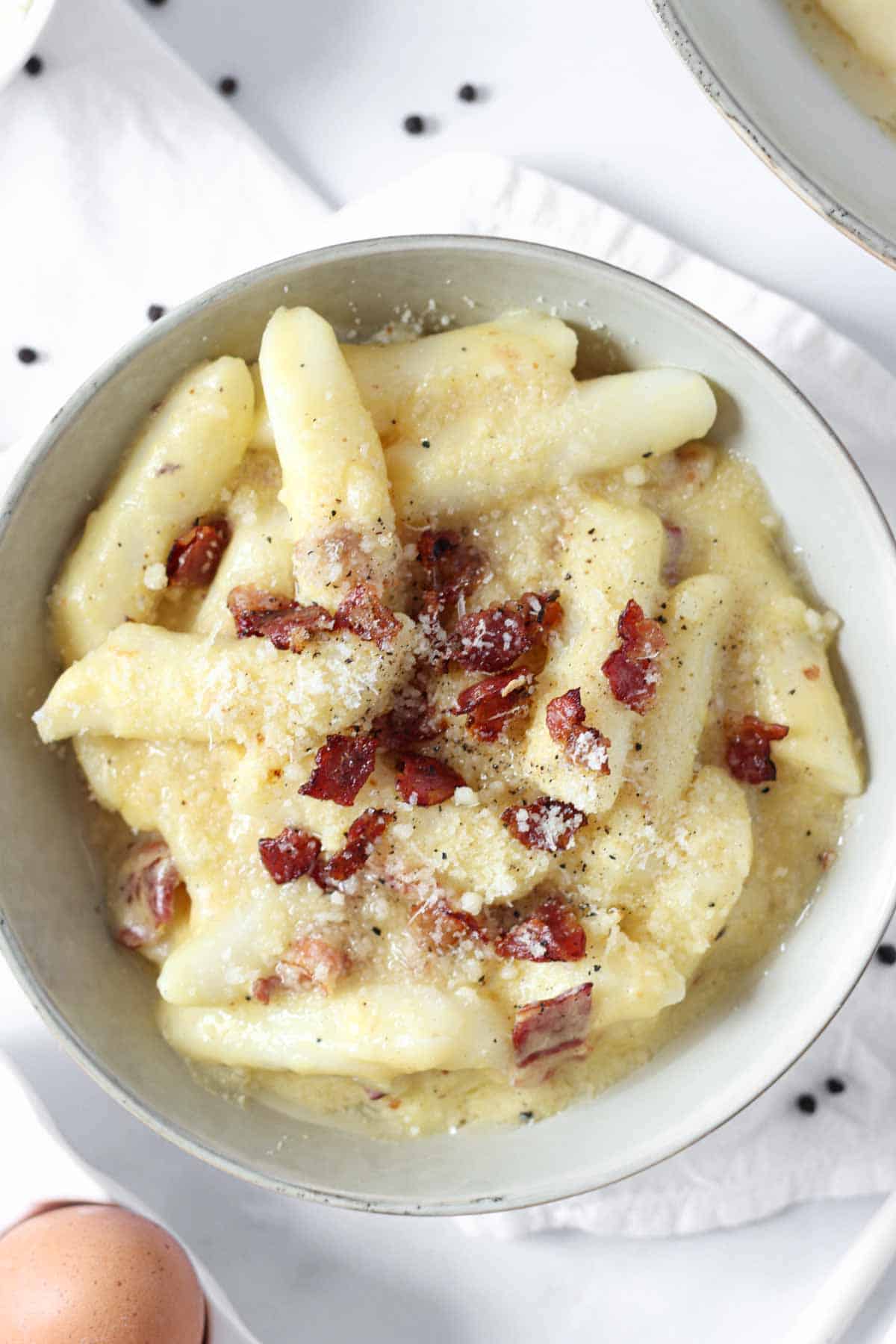
Carbonara tteokbokki combines chewy Korean rice cakes with a creamy sauce made with egg yolks, parmesan, bacon and black pepper. Ready in about 20 minutes.

In Korea, tteokbokki (Korean rice cakes) can be found at street food stalls. You’ll usually find the spicy version but carbonara tteokbokki is an adaptation that has been made popular on social media.
My Korean family and I are not fans of traditional tteokbokki, so we rarely buy or make it. However, the other day, I wanted to use my knowledge of carbonara sauce (learned in Italy) to mix it with rice cakes (garaetteok) and try carbonara tteokbokki. My sister, who had never tried it before, really liked it 🙂 It was harder to convince my mom who usually only cooks and eats healthy Korean food.
Italians would say a resounding “no no” to using cream or bacon in authentic carbonara sauce, and I agree, as traditional spaghetti carbonara does not include these ingredients. However, adding cream creates a thicker and creamier sauce that works especially well with the chewy texture of Korean rice cakes.
What is tteokbokki?
Tteokbokki is a popular Korean dish made with chewy rice cakes, known as garaetteok (a type of tteok, rice cake) that are cooked in a spicy, savory sauce. It is typically made with gochujang (Korean red pepper paste), along with other ingredients such as fish cakes, vegetables, and sometimes boiled eggs.
Tteokbokki is especially known for its chewy texture and spicy gochujang-based sauce. It’s commonly sold as street food in Korea and can be eaten as a snack or meal.
This version skips the spicy sauce and uses a creamy carbonara-style sauce instead, so it’s also a good option if you like rice cakes but don’t want something spicy.
Why you’ll love this recipe
Ingredients
- Egg yolks – traditional carbonara can be made with whole eggs, egg yolks or a combination of both. Since I’m adding cream here, I use just the yolks for a richer sauce.
- Heavy cream – adding cream to the sauce gives the sauce a thicker, creamier texture that works well with the chewy rice cakes.
- Parmesan powder – make sure you use a good brand. I find that a lot of parmesan powders found in supermarkets can be weak in taste. Alternatively, you can buy a parmesan block and grate it yourself. Make sure you do not substitute with Grana Padano which can often be mistaken for parmesan but has a much milder taste.
- Black pepper – if possible, use freshly ground pepper instead of pre-ground black pepper powder. Don’t be too shy about black pepper. It’s important to add a little more than your usual seasoning since black pepper is an important element of carbonara.
- Bacon – this recipe is more Korean than Italian therefore it is fine to use bacon, which is easier to find and cheaper than guanciale or pancetta. But if you’d like to go closer to the Italian version of carbonara, then use guanciale or pancetta.
- Onion – mince the onion thinly.
- Garlic – mince the garlic or crush it using a garlic press (like I usually do) to extract the juice.
- Korean rice cakes – I used cylinder rice cakes but you can use the smaller oval rice cakes if you like. Try to use either fresh or refrigerated rice cakes. In case you use frozen rice cakes, make sure to soak them in cold water for 15 minutes before cooking them.
- Water – a little water loosens the egg yolk and parmesan mixture and helps the sauce coat the rice cakes.

Which rice cakes should I use?
- Fresh – fresh rice cakes are soft, moist, and have a slightly chewy texture. They are usually made from freshly ground rice batter and have a subtle, mild flavor. If you prefer a softer and more tender texture for your tteokbokki, fresh garaetteok may be the best option. Shelf life is usually a few days.
- Refrigerated – refrigerated rice cakes are typically firmer than fresh ones and have a slightly drier texture. They are often stored in the refrigerator section of the grocery store and have a longer shelf life (1-2 weeks) compared to fresh garaetteok.
- Frozen – frozen rice cakes are typically firm and solid, as they are kept frozen to extend their shelf life. They may require soaking in water to soften before using in recipes. Frozen garaetteok are a convenient option for longer storage, they can usually be kept for up to 6 months.
The choice between fresh, refrigerated, or frozen garaetteok for tteokbokki depends on personal preference and the desired texture you want to achieve. However, when it comes to freshness, using fresh garaetteok is always the best option.
How to make carbonara tteokbokki?
- In a bowl, mix egg yolks, heavy cream, parmesan and black pepper.
- In a pan, cook the bacon on medium heat until crispy. Remove the bacon from the pan.
- Add some cooking oil to the pan and cook onion and garlic.
- Add the rice cakes and water and cook for 1-2 minutes until they become soft.
- Add the egg/parmesan mixture, then add the bacon back in and cook for 1-2 more minutes or until the sauce has thickened.
- Sprinkle extra bacon pieces on top.

Substitutions and additions
- Non-dairy cream – if you avoid dairy, you can replace the heavy cream with a non-dairy alternative. Keep in mind that the parmesan will also need to be replaced for a fully dairy-free version.
- Guanciale or pancetta – to come closer to the Italian version of carbonara, you can substitute bacon with guanciale or pancetta.
- Mushrooms – sliced mushrooms work well with the bacon and creamy sauce.
Variations
- Vegetarian Carbonara Tteokbokki – omit the bacon for a vegetarian version.
- Spicy Carbonara Tteokbokki – add chopped red or green chili peppers to the sauce. I usually add chili to my carbonara, whether I’m making it with spaghetti or rice cakes 🙂
How to store and reheat?
Storing
If you have leftover tteokbokki, store it in an airtight container in the refrigerator for up to 2-3 days. Make sure the sauce and rice cakes are fully cooled before storing.
Reheating
To reheat tteokbokki, transfer it to a saucepan or skillet and add a little water to loosen the sauce. Heat over medium heat, stirring occasionally, until heated through. Avoid overcooking the rice cakes to prevent them from becoming too soft.
You can also reheat tteokbokki in the microwave. Transfer it to a microwave-safe dish and heat on high stirring occasionally, until heated through.
Emma’s tips
- Soak rice cakes – if using frozen rice cakes, soak them in water for about 15 minutes before cooking to soften them and improve their texture. Drain and rinse them before adding them to the sauce.
- Don’t overcook rice cakes – be careful not to overcook the rice cakes, as they can become too soft and lose their chewy texture. Cook them just until they are tender but still have a slight bite.
- Use a wide pan – use a wide pan or skillet with a flat bottom to ensure that the rice cakes cook evenly and get coated with the sauce. This will help prevent them from sticking to the pan or clumping together.
- Garnish for flavor – garnish your tteokbokki with extra crispy bacon and parmesan.
- Serve hot – tteokbokki is best served hot, straight from the pan for the best taste and texture.
RECIPE FAQ

More easy one-pot Korean meals
- Dakdoritang (Spicy Korean Chicken Stew)
- Cheese Dakgalbi (Korean Spicy Chicken Stir-Fry)
- Extra Cheesy Buldak Ramen
- Creamy Carbonara Buldak Ramen
- 5-Minute Shin Ramen
- Kimchi Fried Rice
PSSST… WANT COZY RECIPES?
If you make this recipe, leave a comment and a ★ rating to share what you thought. It really helps me keep bringing you new recipes!
Don’t forget to sign up for my newsletter and get your free ebook with 8 authentic Korean recipes, plus my latest recipes straight to your inbox.
Carbonara Tteokbokki (20 Minutes)
Ingredients
- 2 egg yolks
- 120 ml heavy cream
- 100 g parmesan powder
- black pepper
- 12 bacon slices , chopped
- 1 onion , minced
- 3 garlic cloves , minced
- 700 g Korean rice cakes
- 360 ml water
- cooking oil
Instructions
- In a bowl, mix egg yolks, heavy cream, parmesan and black pepper.
- In a pan, cook the bacon on medium heat until crispy. Remove the bacon from the pan.
- Add some cooking oil to the pan and cook onion and garlic.
- Add the rice cakes and water and cook for 1-2 minutes until they become soft.
- Add the egg/parmesan mixture, then add the bacon back in and cook for 1-2 more minutes or until the sauce has thickened.
- Sprinkle extra bacon pieces on top.
Video
Nutrition
The nutritional details provided on That Cute Dish are for informational purposes only and are automatically calculated. Please consider them as estimates rather than precise values, as ingredients and measurements can vary.