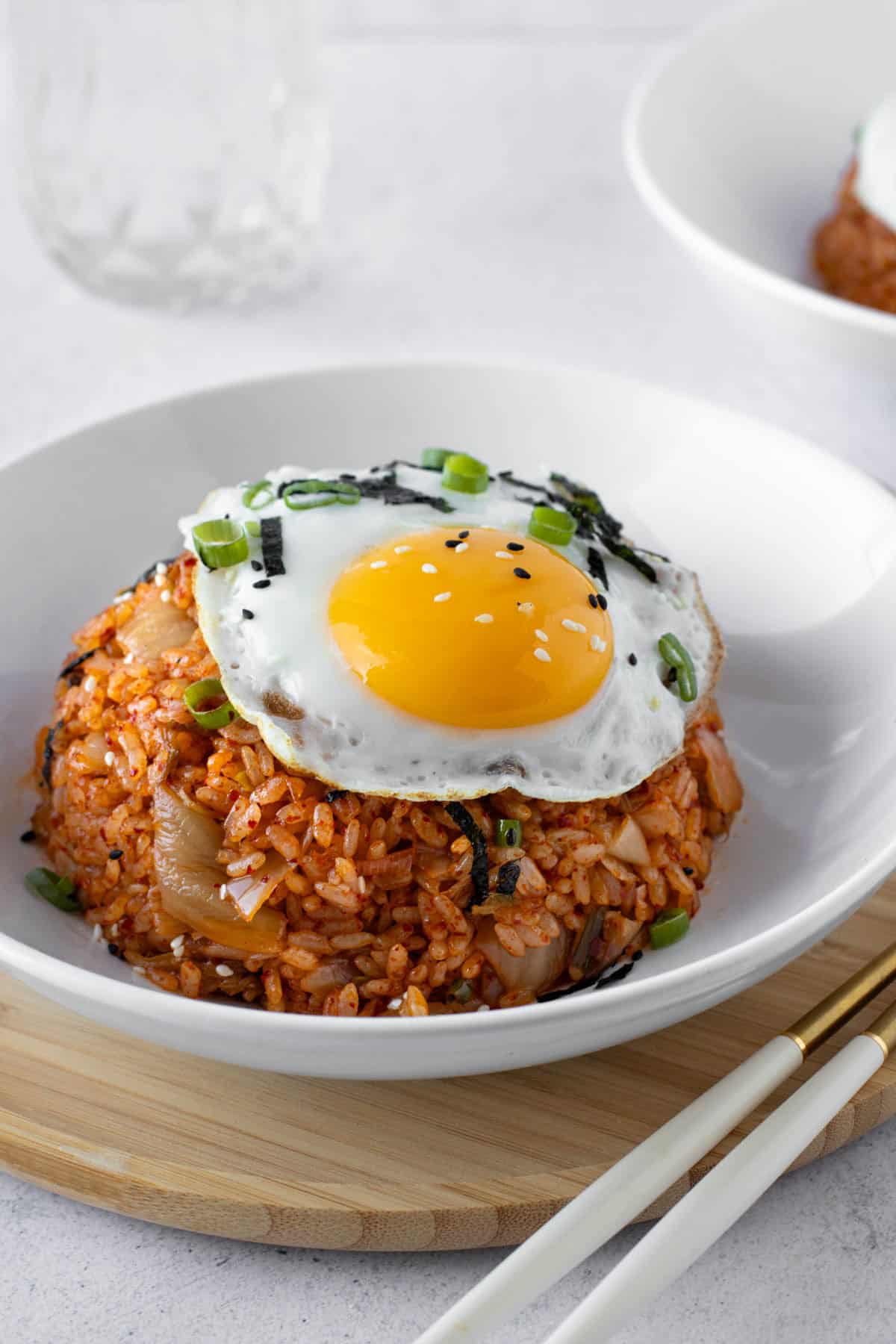
Kimchi fried rice (kimchi bokkeumbap) is a super easy recipe with kimchi for when you want some quick, comforting Korean food. It’s perfect for using up leftover rice and tangy kimchi — ready in about 20 minutes. Make it the classic way with a fried egg on top, or go for the fun UFO version with a golden ring of cheesy, fluffy egg around the rice.
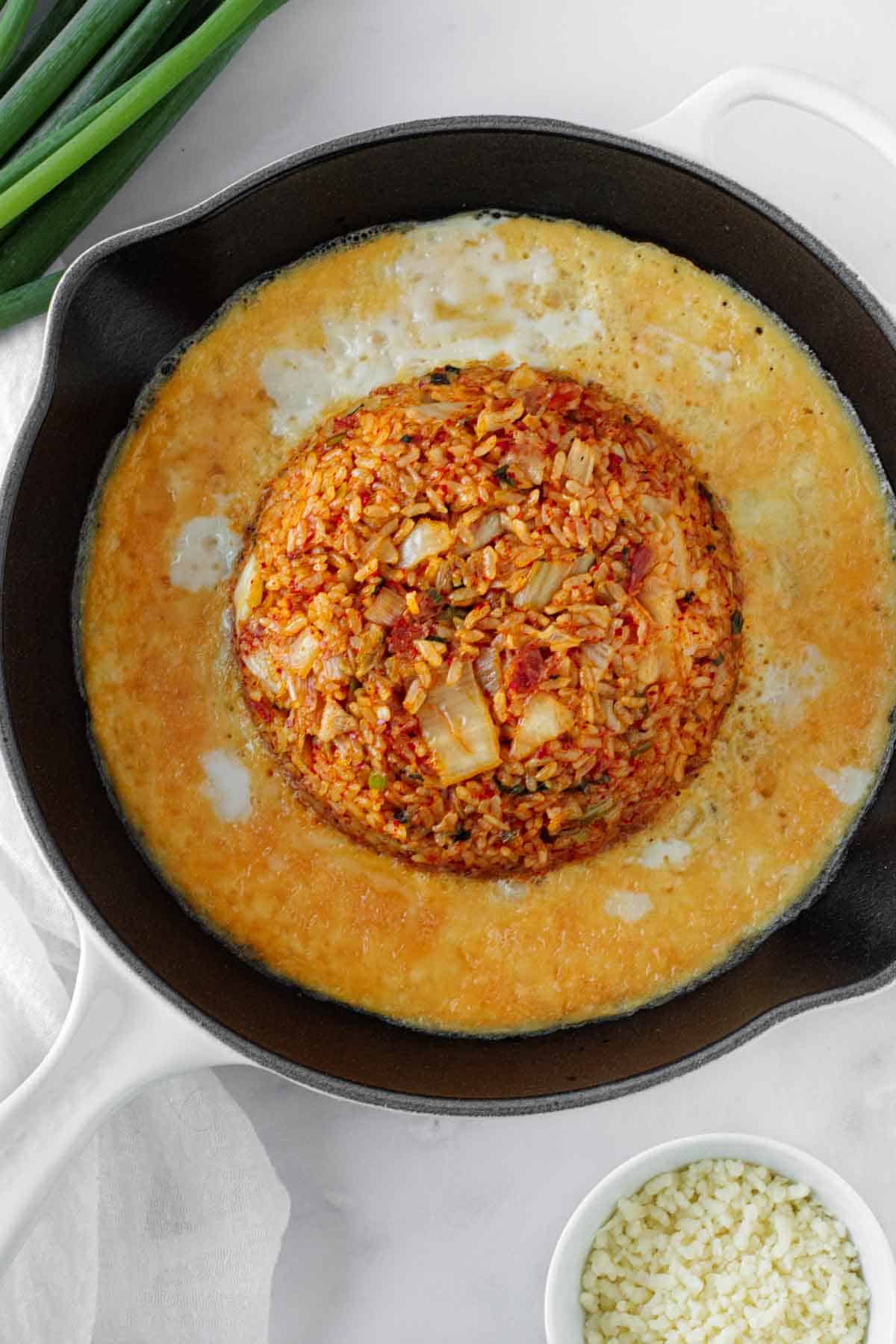
Got some kimchi in the fridge and craving a quick Korean meal? Kimchi fried rice (kimchi bokkeumbap) is one of my go-to easy Korean dishes whenever I want Korean flavours without the effort. If you’ve got day-old rice on hand, even better! You can make kimchi fried rice in about 20 minutes 🙂
I’m giving you two ways to finish it. The classic way is a fried egg on top, simple and the way most people grew up eating it 🍳 Or go for the UFO version, where you pour a ring of egg and/or cheese around the rice so it looks like a little UFO from above 🛸 Same fried rice underneath, just two different toppings.
If you like fried rice, you might also like my Cantonese Fried Rice or my Salmon Fried Rice.
What is kimchi bokkeumbap?
Kimchi bokkeumbap (김치볶음밥) or kimchi fried rice, is one of Korea’s ultimate comfort foods – the kind of quick, no-fuss meal everyone makes when there’s leftover rice and a bunch of kimchi in the fridge. It’s a simple stir-fry of rice, well-fermented kimchi and whatever protein you’ve got lying around (bacon, spam, ham… all fair game!).
The magic comes from using ripe, tangy kimchi – it caramelises in the pan, turning the rice savoury, spicy, and a little smoky. Traditionally it’s topped with a fried egg, but modern versions (like my UFO kimchi fried rice) surround the rice with a ring of fluffy eggs and/or melted cheese.
It’s quick, comforting, super adaptable, and honestly one of the easiest Korean dishes you can make at home – no special ingredients or skills needed.
Ingredient notes
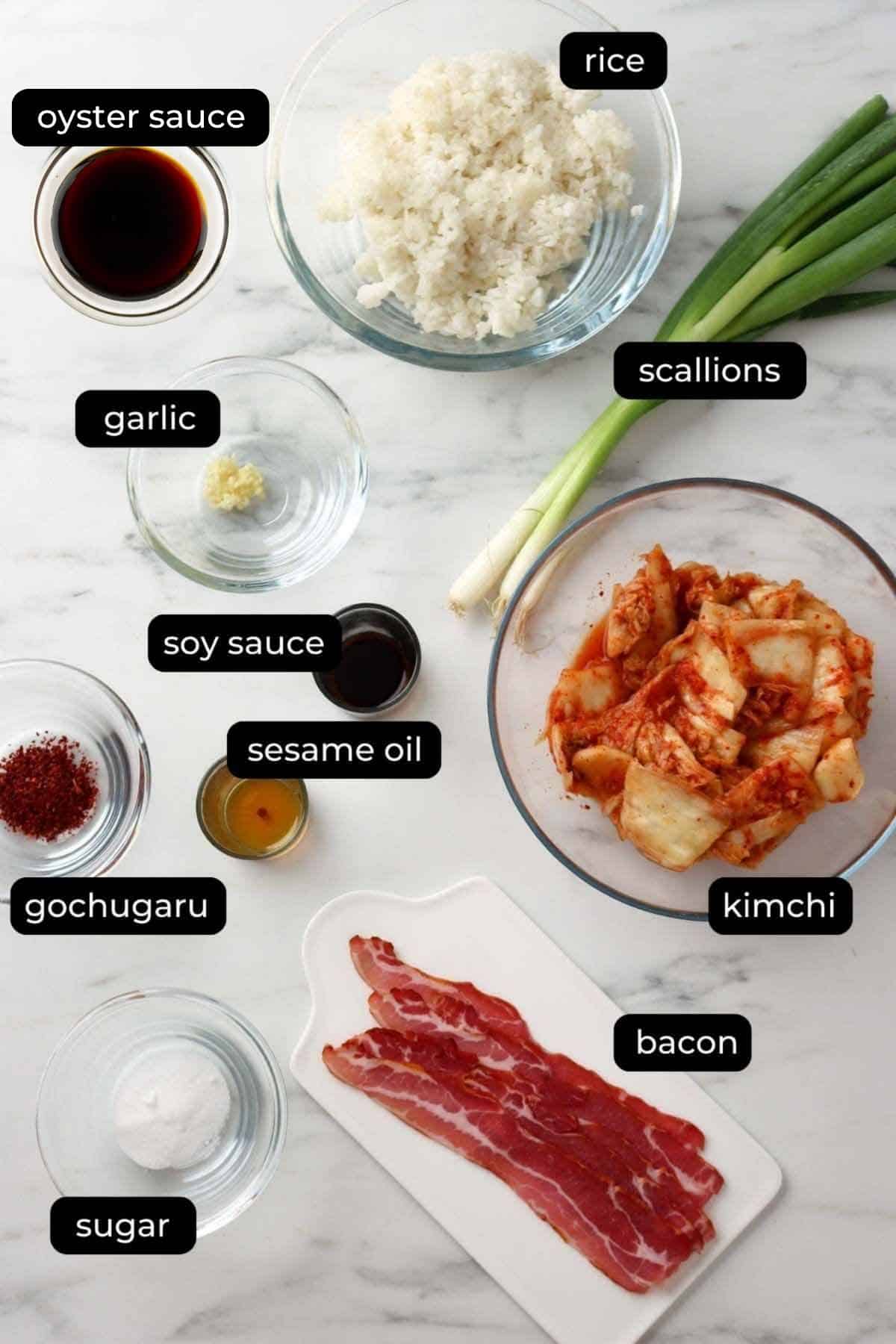
- Day-old short-grain rice – for authentic kimchi fried rice, use short-grain rice (Korean or Japanese). Long-grain rice has a different texture and won’t give you that perfect sticky, slightly chewy bite.
- Bacon slices – feel free to swap for bacon bits or other meats. I love using Vienna or Frankfurt sausages, Korean spam, or pork belly – all super popular in Korea.
- Kimchi – I always use my homemade kimchi, but store-bought works too. The best results come from well-fermented, ripe kimchi that’s tangy. If your kimchi is still young and mild, no worries, you can still use it, just expect a less intense flavor and skip the sugar.
- Cooking oil – use a neutral oil like sunflower or canola oil so it doesn’t overpower the kimchi’s flavor.
- Sugar – sugar helps balance the acidity and spice of ripe kimchi, rounding out the flavors. If you’re using young kimchi, you can skip the sugar since it’s less sour.
- Soy sauce – Korean soy sauce is the way to go here. Chinese soy sauce is darker and saltier, which can overpower the dish and change the flavor profile.
Garnish
- Eggs – for the UFO version, mix the eggs with mozzarella to make the ring (or go 100% eggs or 100% mozzarella if you prefer). For the classic version, just fry an egg separately and skip the ring entirely.
- Mozzarella – I add it to the eggs for extra gooeyness when making the UFO version. If you want a super cheesy kimchi fried rice without the eggs, just sprinkle mozzarella over your finished fried rice and melt it for cheesy goodness. No dome needed!

Why using day-old rice to make fried rice?
Day-old rice is your best friend here! Freshly cooked rice is too soft and sticky, which makes your kimchi fried rice mushy. Using cold, leftover rice with firm grains helps each grain stay separate when stir-frying, giving you that perfect texture – slightly chewy but not clumpy.
If you don’t have leftover rice, just spread freshly cooked rice on a tray and pop it in the fridge for at least 4 hours to dry out before cooking.
Which kimchi to use?
Ripe kimchi is where the magic happens! The longer it ferments, the tangier, softer, and more flavorful it becomes – making your kimchi fried rice extra punchy and delicious.
Fresh kimchi can be a bit too crisp and mild for this dish, so using well-fermented (but not overly sour) kimchi gives you that perfect balance of tang, spice, and umami that really wakes up the rice.
If you’re buying prepacked kimchi, I highly recommend the NH (Nonghyup) brand, especially the kimchi that comes in a plastic jar. It tastes the freshest and most like homemade kimchi compared to other store-bought options.
Step-by-step instructions
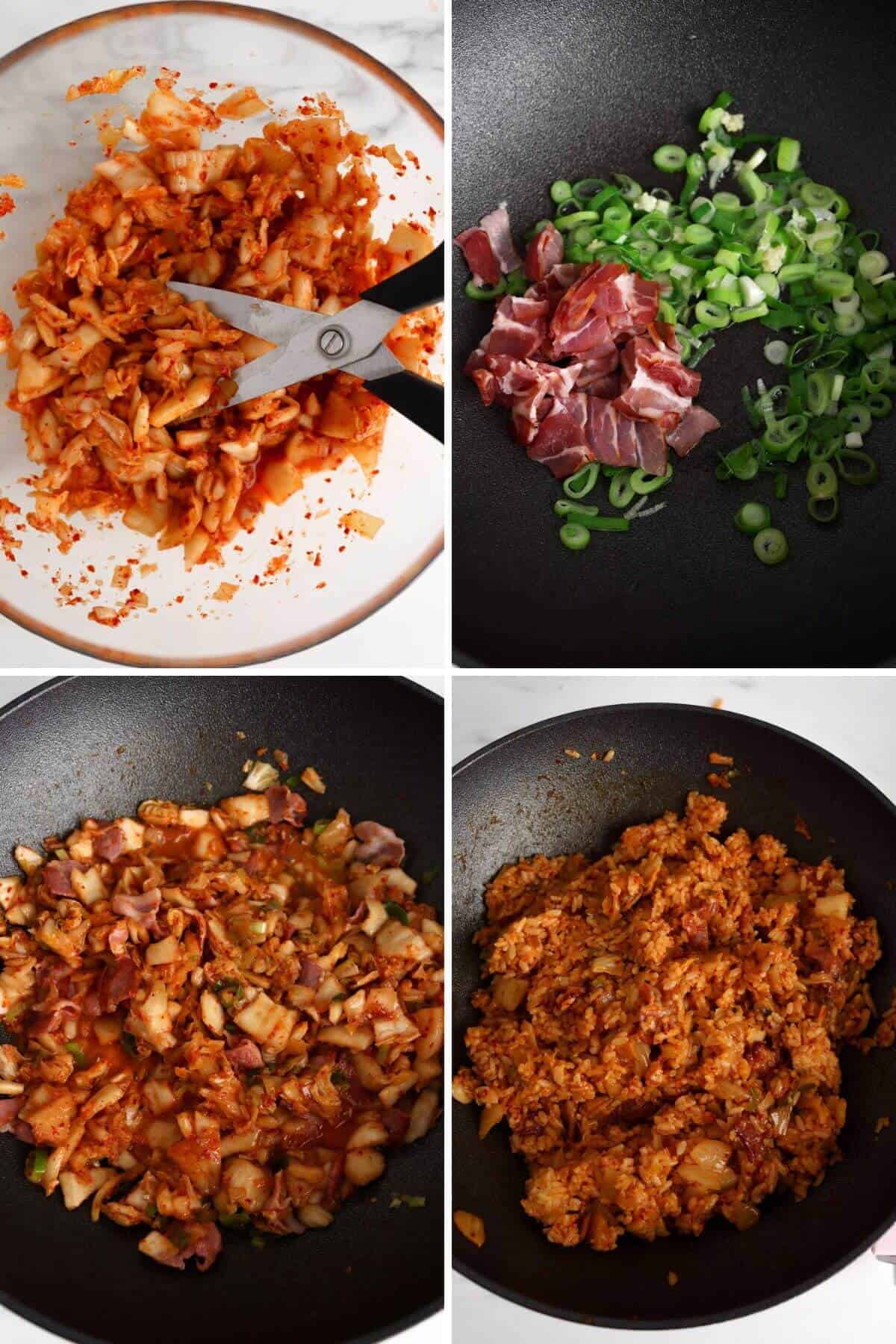
- Prepare the rice and ingredients – Cook the rice ahead of time and let it cool completely, or use day-old rice. Break up any large clumps. Chop the kimchi into small pieces and separate the white and green parts of the green onions.
- Cook the aromatics and meat – Heat a little cooking oil in a large pan over medium heat. Sauté the white parts of the green onions and garlic until fragrant. If using meat, add it and cook until browned and, if using bacon, slightly crispy.
- Stir-fry and season – Add the kimchi and sugar and stir-fry for 2–3 minutes, until the kimchi softens and starts to caramelize slightly. Add the gochugaru, soy sauce and oyster sauce and stir briefly.
- Add the rice – Add the rice and 1 tablespoon of kimchi juice. Stir-fry over medium-high heat, breaking up any clumps, until everything is well combined and the rice is evenly coated. Add more kimchi juice as needed.
- Finish – Turn off the heat and stir in the sesame oil and most of the green parts of the green onions.
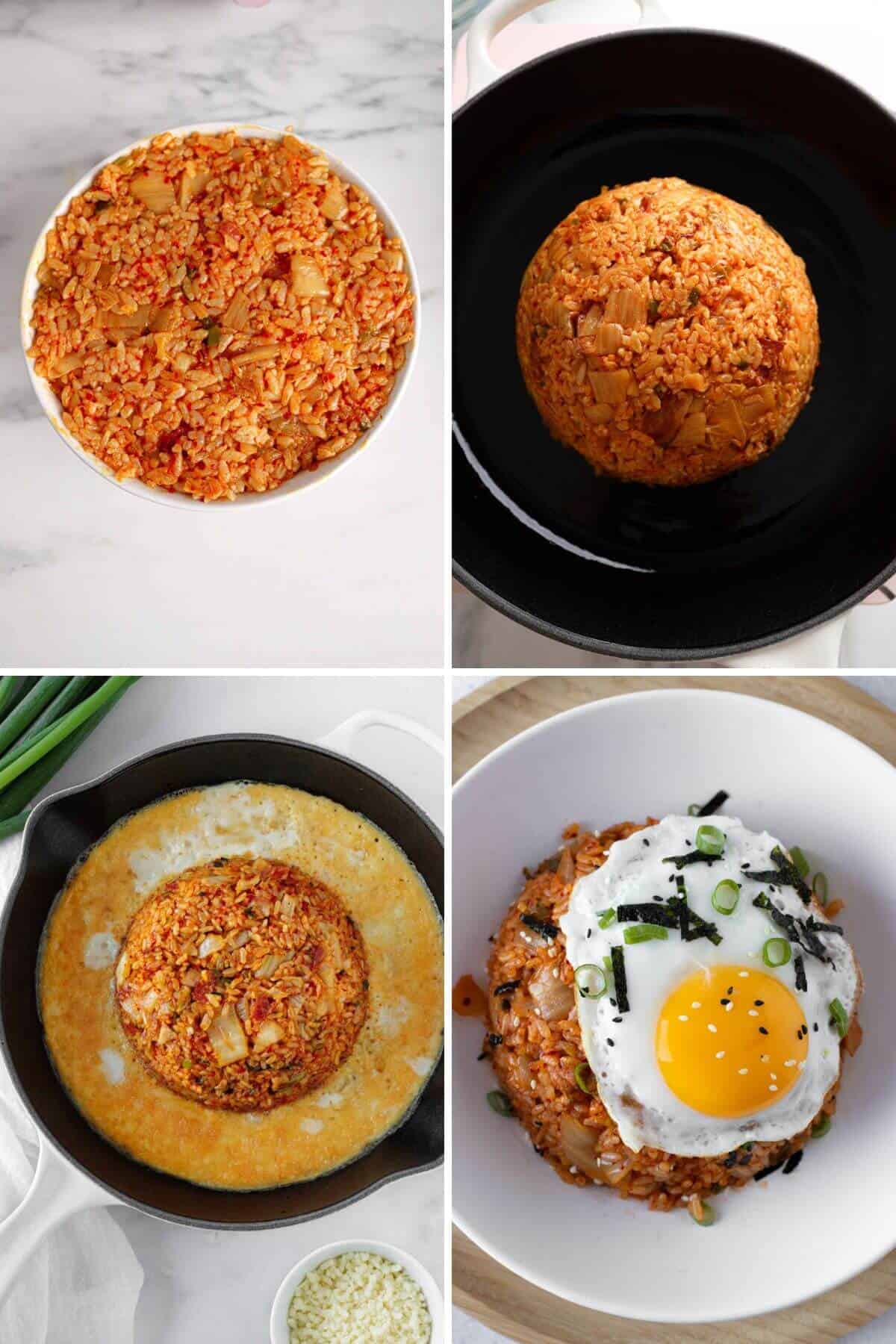
- Serve (fried egg version) – Divide between two plates and top each serving with a fried egg. Finish with sesame seeds, roasted seaweed and the remaining green onions.
- Serve (egg ring version) – Divide between two plates. Shape the fried rice into a dome in the center of the pan. Lightly beat the eggs so the yolks and whites aren’t fully blended. On low heat, heat some oil around the kimchi fried rice dome in the pan. Pour the beaten egg around the rice dome, sprinkle mozzarella cheese on top of the egg. Cover the pan and cook until the cheese melts and the egg sets gently.
Variations
- Meat – keep it simple by skipping the meat, or swap bacon for Vienna sausage, Korean spam, or pork belly.
- Cheese – craving cheesy? Skip the egg, keep the fried rice loose in the pan, pile on a mountain of mozzarella, then cover with a lid for a minute or two on low heat until it’s gooey and melty. See below the cheesy kimchi bokkeumbap I made last week. It’s like the kimchi fried rice version of my cheesy dakgalbi.

How to serve kimchi fried rice?
Serve your kimchi fried rice hot and fresh, straight from the pan! It’s perfect as a quick meal on its own, but if you want to turn it into a fuller feast, serve it with some banchan (Korean side dishes).
How to store, freeze and reheat?
Store – pop leftover kimchi fried rice into an airtight container and refrigerate for up to 2 days.
Freeze – avoid freezing kimchi because freezing can make the rice texture mushy and watery, and the kimchi may lose its crispness and fresh flavor. It’s best to store it in the fridge and enjoy within a couple of days for the best taste and texture.
Reheat – reheat in a pan over medium heat with a splash of water to loosen it up and prevent drying. Avoid microwaving straight away if you want it a bit crispy. A quick toss in a hot pan brings back that lovely texture and flavor.
Emma’s tips
- Use day-old rice – fresh rice is too soft and sticky, but leftover rice dries out just enough to give you that perfect fluffy, separate grain texture.
- Ripe kimchi is key – it adds amazing depth and flavor. But if your kimchi very old and extra sour, add an extra pinch of sugar to balance it out.
- Don’t skip the kimchi juice – it’s liquid gold that boosts flavor and helps everything come together.
- Go easy on the oil – use just enough oil to get a nice fry without making the dish greasy.
- Want that cheesy UFO effect? Pour your eggs slowly in a ring and don’t rush. Low heat helps you get that perfect egg ring without burning.
RECIPE FAQ
More recipes with kimchi
PSSST… WANT COZY RECIPES?
If you make this recipe, leave a comment and a ★ rating to share what you thought. It really helps me keep bringing you new recipes!
Don’t forget to sign up for my newsletter and get your free ebook with 8 authentic Korean recipes, plus my latest recipes straight to your inbox 💌
Easy Kimchi Fried Rice (2 Ways)
Easy Kimchi Fried Rice (2 Ways)
Ingredients
- 1½ rice cooker cup short-grain rice (Note 1) , cooked day old rice (Note 1)
- 3 green onions , chopped
- 1 garlic clove , minced
- 100 g bacon slices , cut in bite size | or Vienna sausage, Frankfurt sausage, Korean spam or pork belly (Note 2)
- 375 g kimchi , cut into small pieces (Note 3)
- cooking oil
- 1 tsp sugar
- 1 tsp gochugaru (Note 4)
- ½ tbsp soy sauce
- 1 tsp oyster sauce (Note 5)
- 2 tsp sesame oil
- 3 tbsp kimchi juice (Note 6)
Garnish (fried egg version)
- 2 fried eggs
- sesame seeds
- kim (Korean roasted seaweed) , thinly sliced
- green onions , chopped
Garnish (egg ring version)
- 2 eggs
- 50 g mozzarella
Instructions
- Prepare the rice and ingredients – Cook the rice ahead of time and let it cool completely, or use day-old rice (Note 1). Break up any large clumps. Chop the kimchi into small pieces and separate the white and green parts of the green onions.
- Cook the aromatics and meat – Heat a little cooking oil in a large pan over medium heat. Sauté the white parts of the green onions and garlic until fragrant. If using meat, add it and cook until browned and, if using bacon, slightly crispy (Note 2).
- Stir-fry and season – Add the kimchi and sugar and stir-fry for 2–3 minutes, until the kimchi softens and starts to caramelize slightly (Note 3). Add the gochugaru, soy sauce and oyster sauce and stir briefly.
- Add the rice – Add the rice and 1 tablespoon of kimchi juice. Stir-fry over medium-high heat, breaking up any clumps, until everything is well combined and the rice is evenly coated. Add more kimchi juice as needed (Note 6).
- Finish – Turn off the heat and stir in the sesame oil and most of the green parts of the green onions.
- Serve (fried egg version) – Divide between two plates and top each serving with a fried egg. Finish with sesame seeds, roasted seaweed and the remaining green onions.
- Serve (egg ring version) – Divide between two plates. Shape the fried rice into a dome in the center of the pan. Lightly beat the eggs so the yolks and whites aren’t fully blended. On low heat, heat some oil around the kimchi fried rice dome in the pan. Pour the beaten egg around the rice dome, sprinkle mozzarella cheese on top of the egg. Cover the pan and cook until the cheese melts and the egg sets gently.
recipe notes
- Rice – Use day-old rice, or cook the rice ahead of time and let it cool completely before using. Freshly cooked rice contains more moisture and can make your fried rice mushy. For Korean fried rice, I recommend Korean short-grain rice, which has a different texture from long-grain rice.
- Meat – Meat is optional, but you can add some if you like. Bacon and Vienna sausage are my favorites, but Korean Spam or pork belly also work really well.
- Kimchi – Use well-fermented, sour kimchi for the best flavor. Fresh kimchi is milder and won’t give the fried rice the same depth of flavor.
- Gochugaru – Adjust the amount depending on how spicy your kimchi is and how much heat you like. If your kimchi is already quite spicy, reduce the gochugaru or leave it out altogether.
- Soy sauce and oyster sauce – The saltiness of kimchi and sauces can vary considerably between brands. If your kimchi is particularly salty, reduce the soy sauce and oyster sauce slightly and adjust to taste.
- Kimchi juice – Start with 1 tablespoon and add more as needed. The amount depends on how juicy, flavorful and salty your kimchi is. If your kimchi is on the dry side, a little extra juice adds more kimchi flavor and helps coat the rice. If it’s particularly salty, use less or skip it.
- Nutrition – Calculated for the fried egg version. The egg ring version (with mozzarella) will be higher in calories and fat.
Equipment

Nutrition
The nutritional details provided on That Cute Dish are for informational purposes only and are automatically calculated. Please consider them as estimates rather than precise values, as ingredients and measurements can vary.