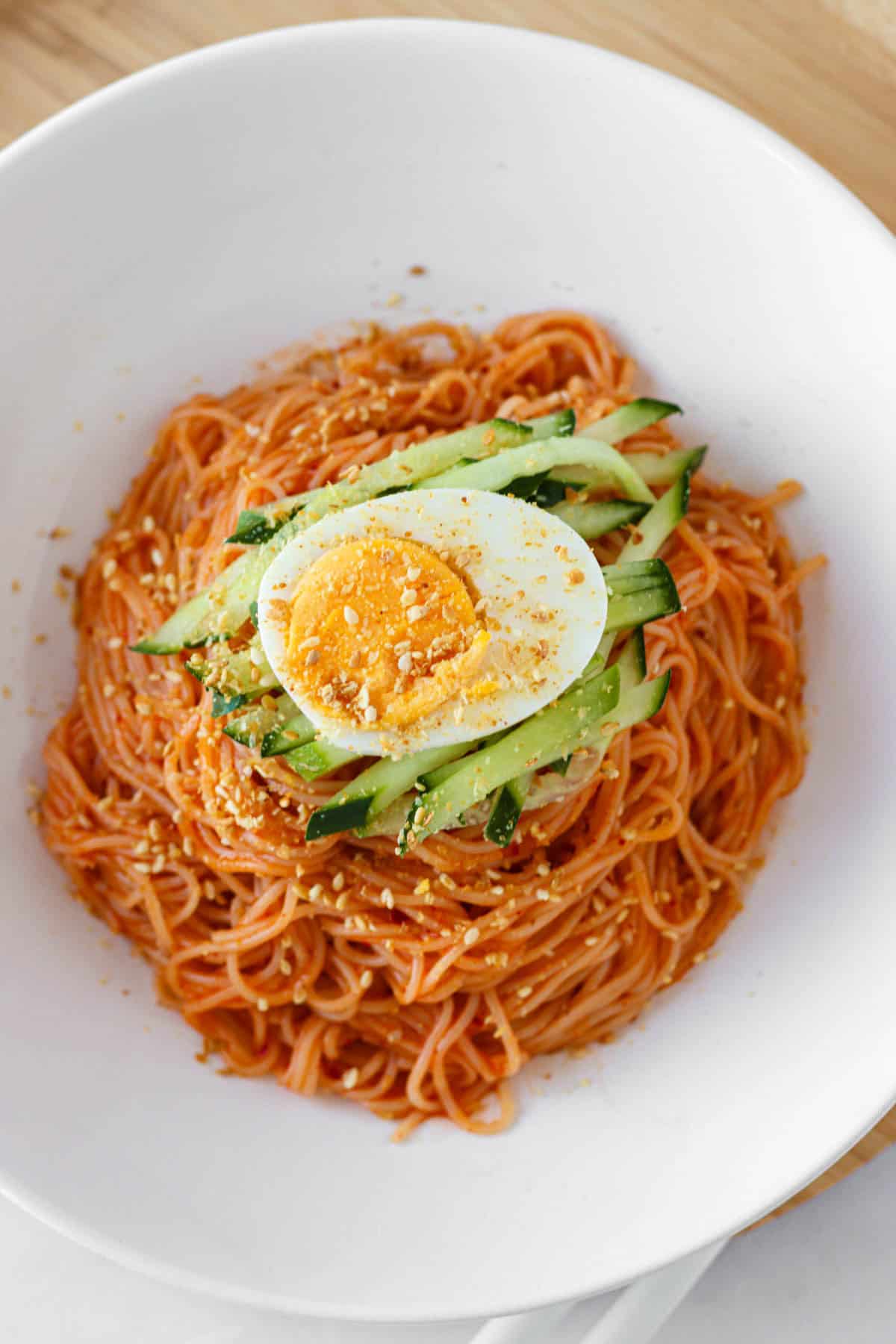
Bibim guksu is a cold Korean noodle dish — chewy somyeon noodles coated in a spicy, sweet, and tangy gochujang sauce, finished with crisp cucumber, a hard-boiled egg, and toasted sesame seeds.
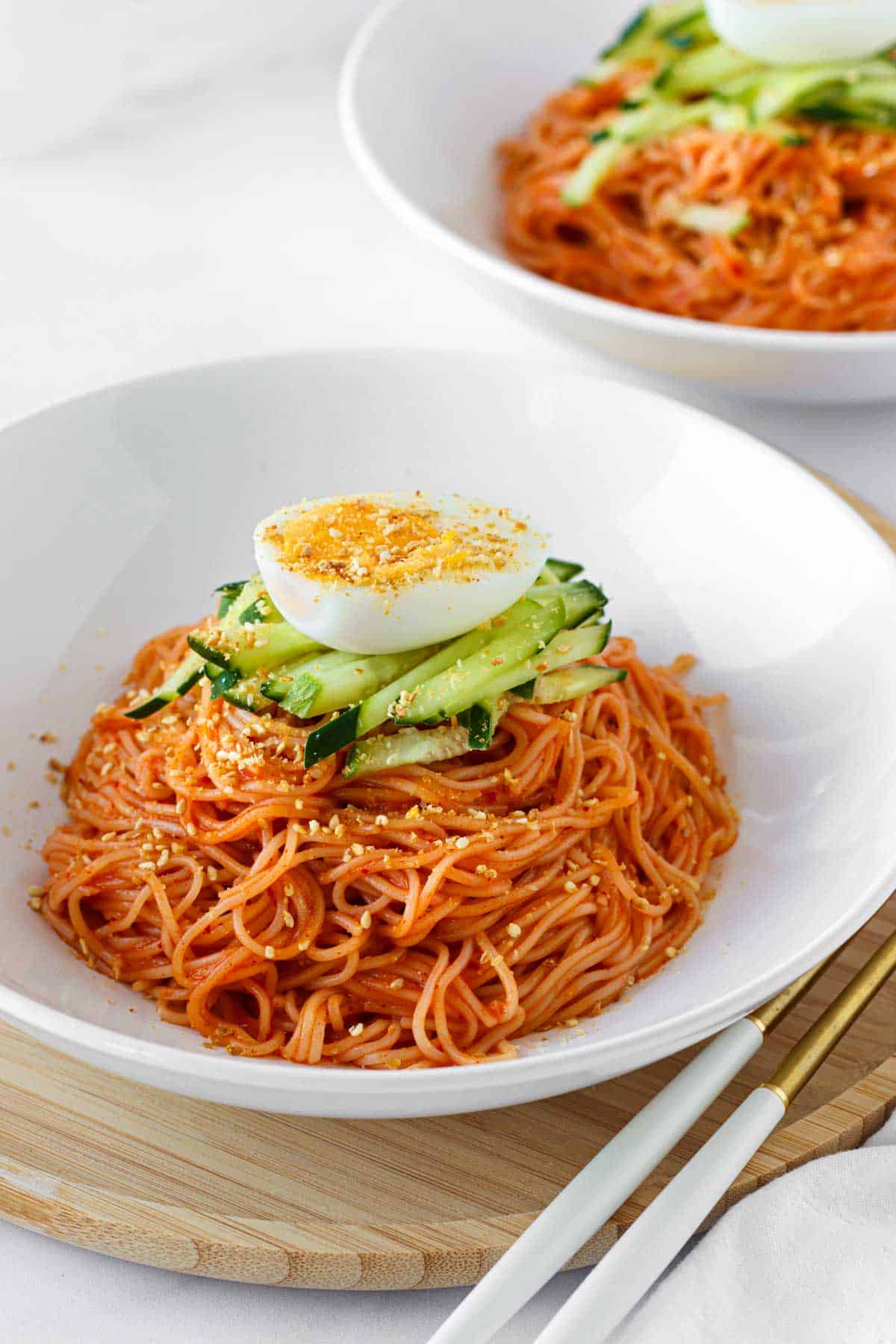
Bibim guksu is what I make the second summer turns brutal in Brussels — the kind of cold, spicy noodles I love ordering at restaurants whenever I’m in Korea.
I like mine punchy and well balanced: spicy from gochujang and gochugaru, tangy from Korean brewed vinegar, with a little Korean mustard and plum extract rounding out the sauce. A good ice-water rinse keeps the somyeon cold and springy, which makes all the difference here.
It’s light, refreshing, and exactly what I want on a hot day.
What is Bibim Guksu?
Bibim guksu (비빔국수) is a cold Korean noodle dish — springy somyeon noodles coated in a spicy, sweet, and tangy gochujang sauce, finished with crisp cucumber, a hard-boiled egg, and toasted sesame seeds. “Bibim” means mixed, “guksu” means noodles — same idea as bibimbap, just with noodles instead of rice.
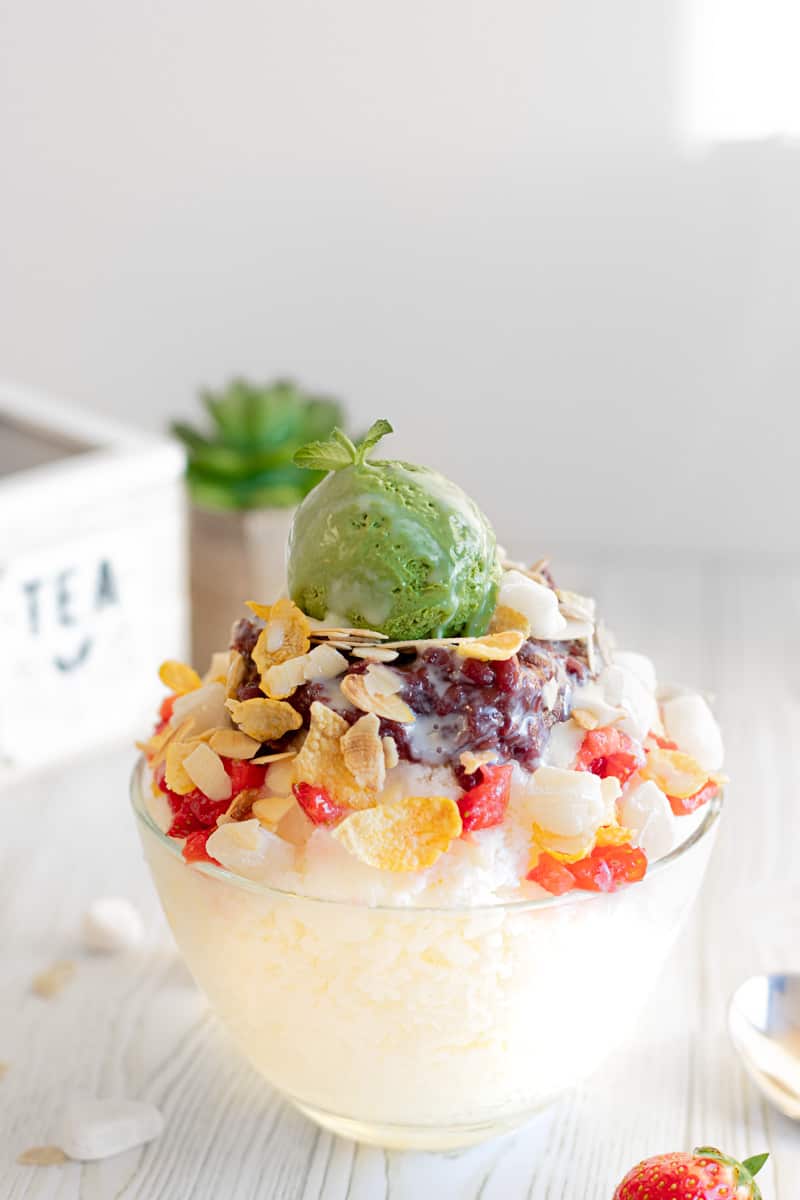
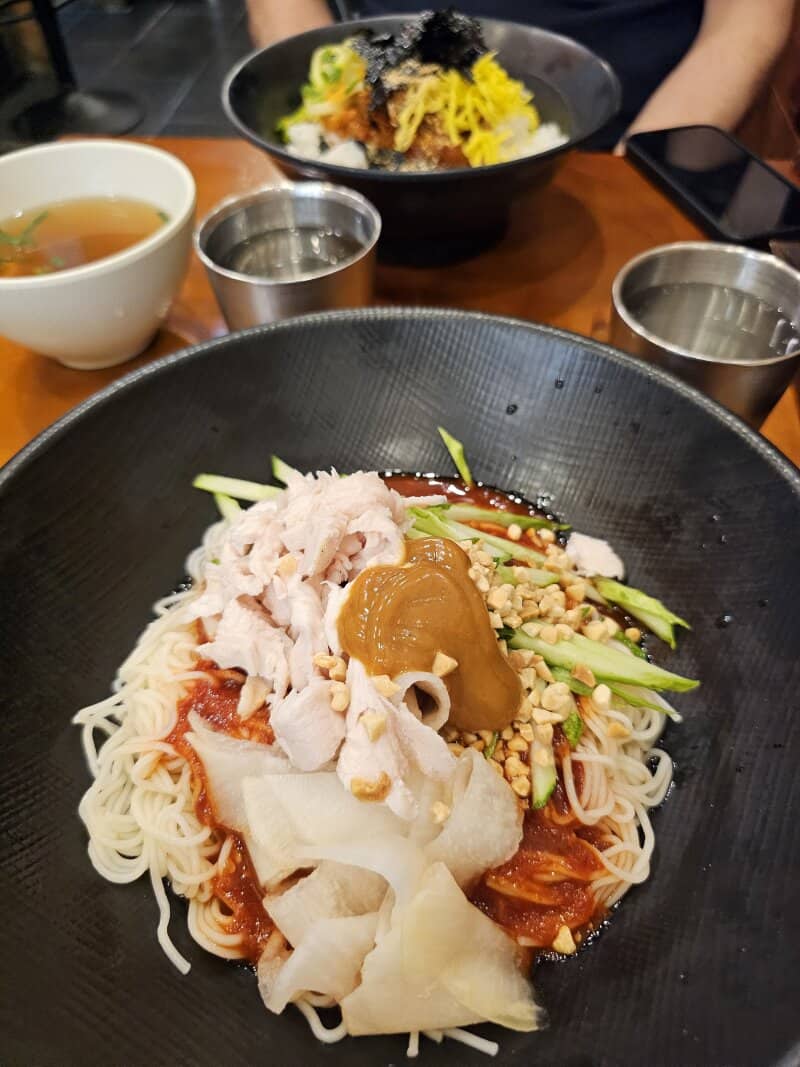
It’s Korean summer food, basically — exactly what I crave on a hot day. Presentation varies by restaurant: some serve it already tossed, with the sauce and noodles mixed together, while others plate it deconstructed, with the toppings arranged on top — like the bowl I had in Hongdae (pictured below) — for you to mix right before eating.
Bibim guksu’s ancestor, goldongmyeon, shows up in 19th-century Joseon-era records — and that version used soy sauce and sesame oil, no gochujang or kimchi at all. Many versions today start with a gochujang, vinegar, and sugar base instead, while others add kimchi, fruit, mustard, or different sweeteners on top of that.
Bibim Guksu vs Bibim Naengmyeon
These two get mixed up a lot, but they’re not the same dish. Bibim guksu uses somyeon, thin wheat noodles with a light, springy bite. Bibim naengmyeon uses naengmyeon noodles, usually made with buckwheat and starch, which have a much firmer, chewier texture.
If you’re shopping for this recipe, look for somyeon, somen, or Korean thin wheat noodles — not anything labeled naengmyeon.
Ingredient notes
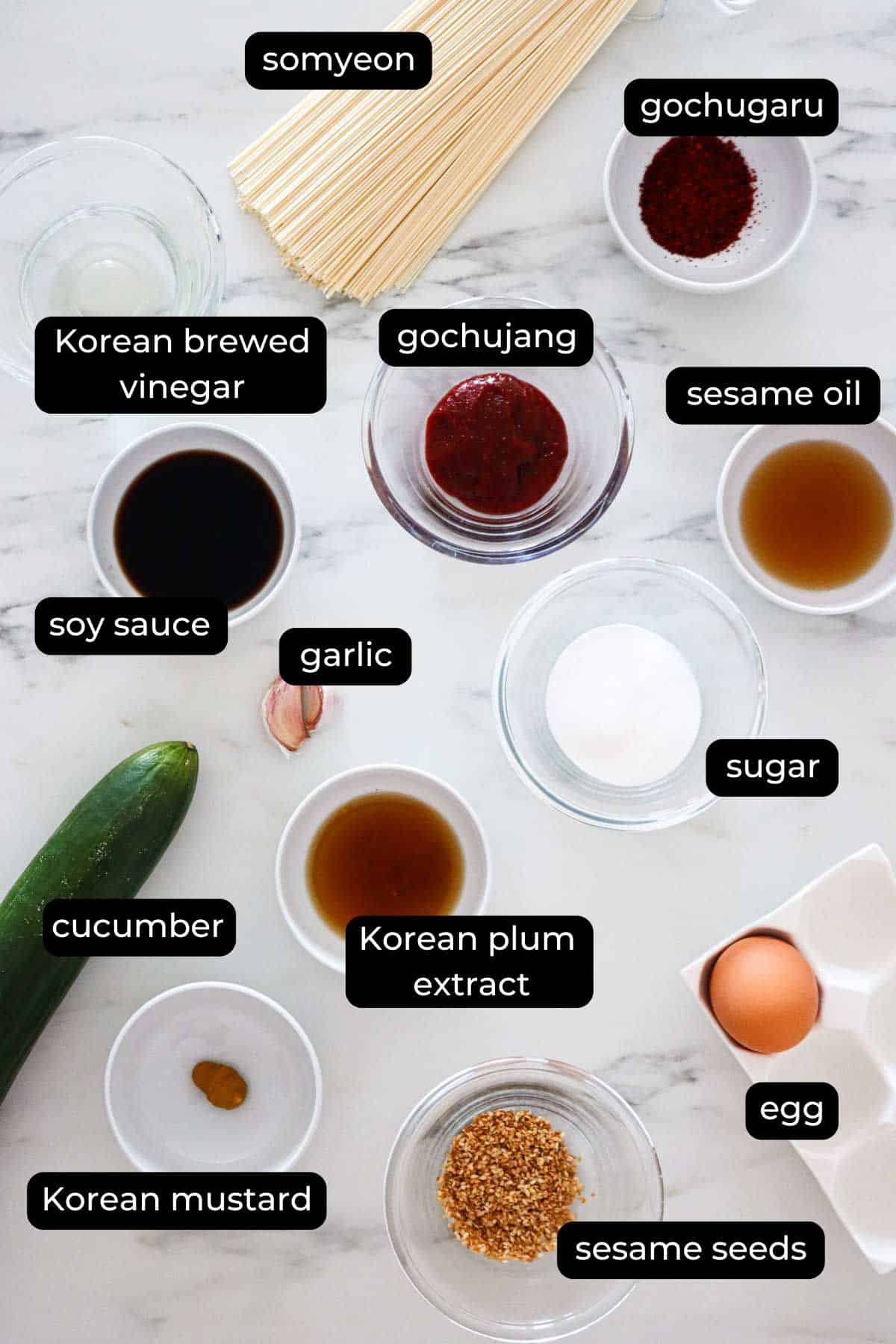
- Somyeon noodles. Thin Korean wheat noodles, usually sold dried in bundles at Korean grocery stores. They cook in minutes, and how you rinse them afterward makes a big difference to the texture — more on that in the tips section.
- Yangjo-sikcho. This is Korean brewed vinegar. It gives the sauce the sharp, tangy flavor I like in bibim guksu. Regular rice vinegar is a totally fine swap if that’s what you have.
- Gochujang and gochugaru. Gochujang gives the sauce its deep, savory-sweet base, while gochugaru adds a more direct heat. I use both because the sauce tastes more balanced that way.
- Yeongyeoja. Korean mustard, sold in small tubes or jars. It’s meant to sit quietly in the background, not steal the show. Go easy at first and taste before adding more, since brands vary in strength.
Can you substitute yeongyeoja with regular mustard?
Regular mustard (Dijon, yellow mustard) or a sweet mustard won’t really replace yeongyeoja — their acidity or sweetness don’t recreate that sharp, nose-clearing heat.
The closest substitute is a small dab of wasabi. The kind of heat is similar, even if the flavor isn’t identical. Start with about half the amount of yeongyeoja called for, then adjust to taste — wasabi tends to hit harder, and its heat varies a lot depending on whether it’s fresh, from a tube (often horseradish-based), or reconstituted from powder.
- Maesiljeong. Korean plum extract. Fruity, a little sweet, and slightly tangy. Don’t have it? Replace the 1 tablespoon maesiljeong with ½ tablespoon sugar, then taste and adjust. The sauce will be a touch flatter, but still good.
- Sesame oil. Grab the toasted kind, not the light, untoasted version made for high-heat cooking. It’s darker and nuttier, and it makes a real difference in the finished sauce.
- Toppings. Cucumber and a hard-boiled egg are the classics. If you’re more of a jammy-yolk person, go for it.
Step-by-step instructions
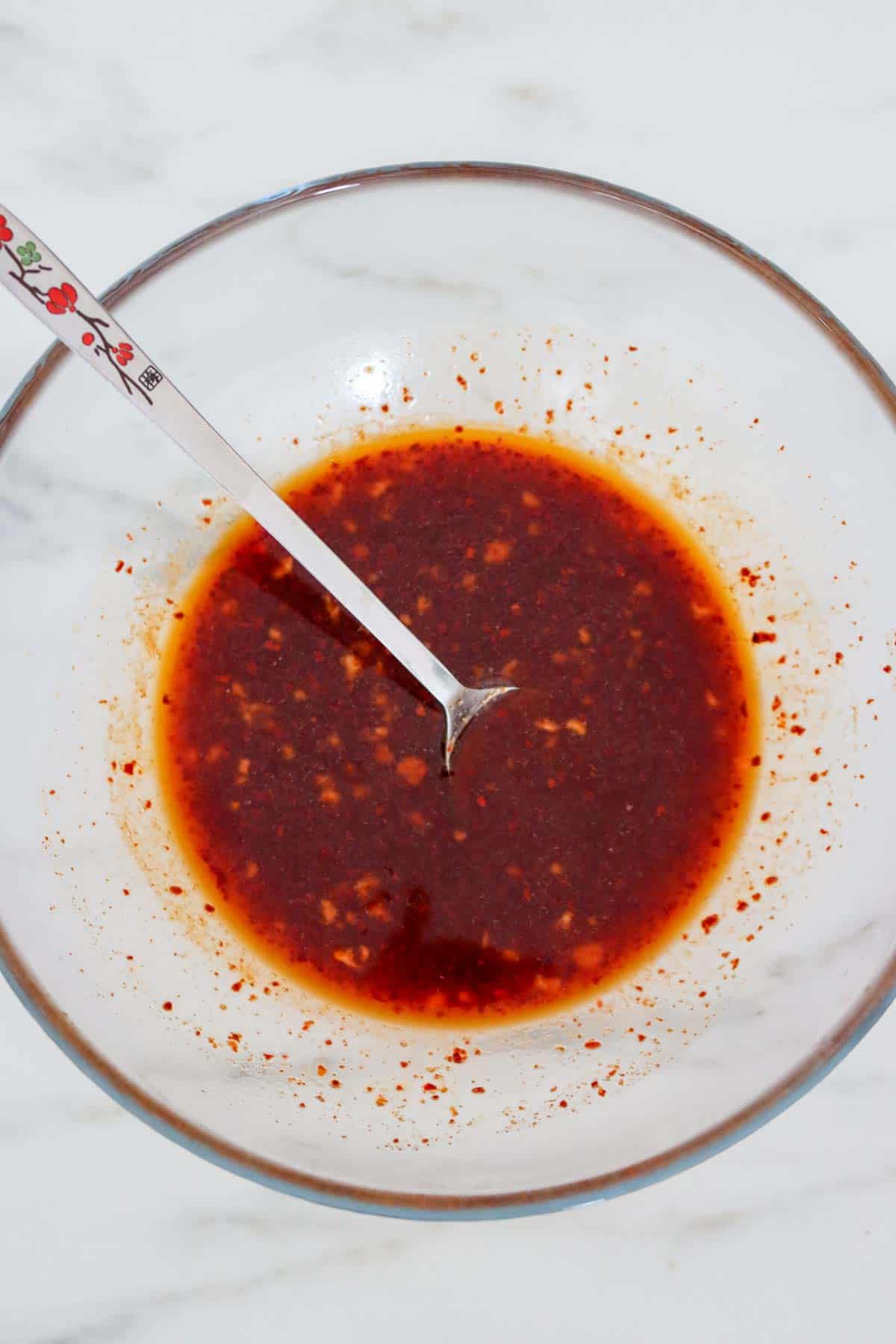
- Make the sauce – Mix all the sauce ingredients together in a bowl until the sugar is fully dissolved.
- Prepare the toppings – Cut the cucumber into a fine julienne. Toast the sesame seeds in a dry pan for a few minutes, until lightly golden and fragrant, then lightly crush them, leaving some texture.
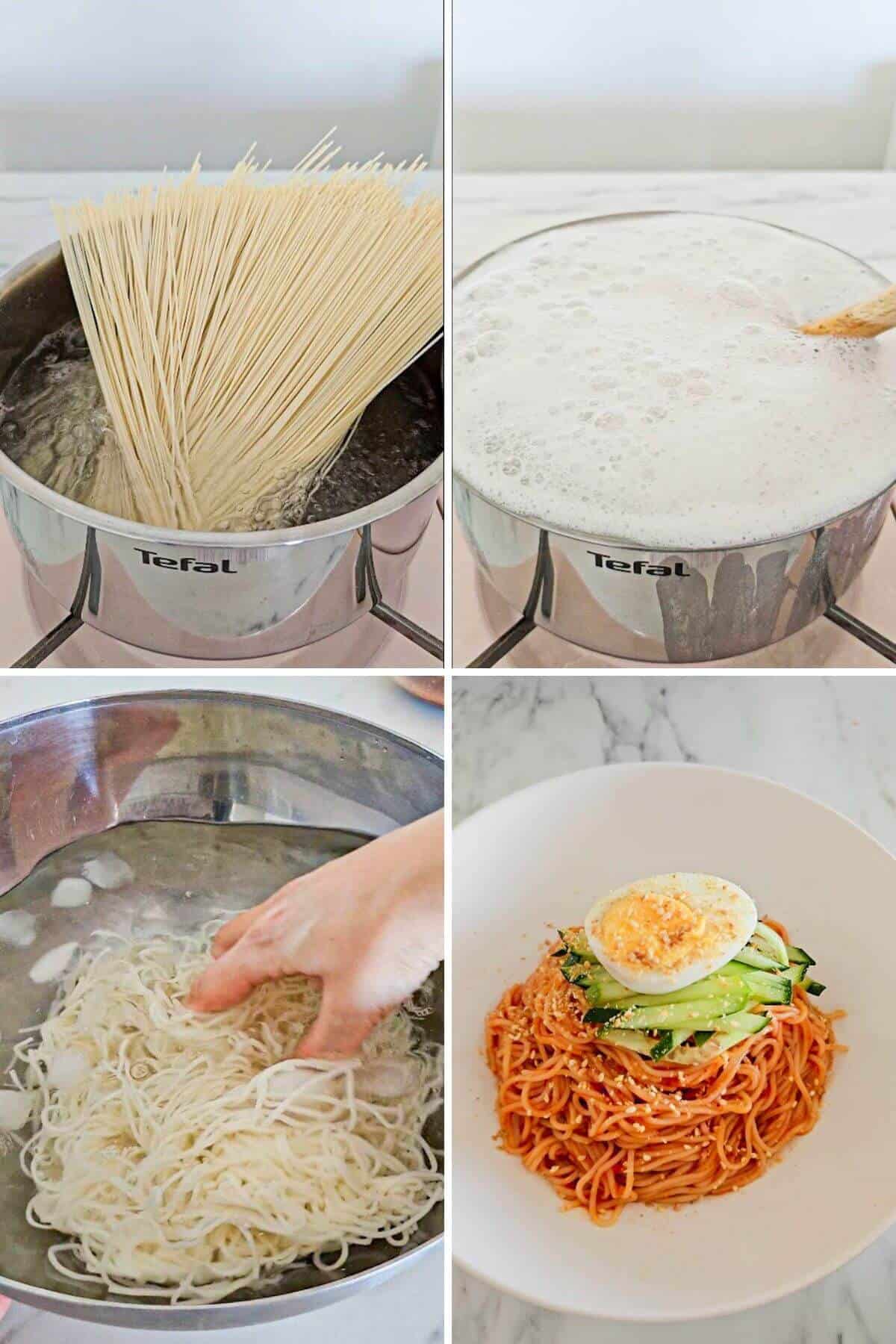
- Cook the noodles – Bring a large pot of water to a boil and add the noodles. When the water foams and rises, add a cup of cold water. Let it come back to a boil and repeat once more, for a total of three boil-ups. Cook for about 2 to 4 minutes in total depending on your preferred texture; I like mine at around 3 minutes 30 seconds.
- Rinse and chill the noodles – Drain the noodles and rinse them vigorously under cold running water. Transfer them to a large bowl of ice water with ice cubes and rinse them again with your hands. Drain very well.
- Toss and serve – In a large bowl, toss the well-drained noodles with all the sauce until evenly coated. Divide between bowls and top with cucumber, hard-boiled egg, and sesame seeds. Serve immediately.
Variations
Bibim guksu is one of those dishes that can be made a little differently depending on who’s cooking it. Here are a few easy ways to make it your own.
- Kimchi bibim guksu. Add chopped, well-fermented kimchi and a splash of kimchi juice to the sauce. Depending on how sour, sweet, and spicy your kimchi is, you may want to slightly reduce the vinegar, sweetener, or gochugaru.
- Make it milder. Cut the gochugaru in half or leave it out entirely. You’ll still get some heat from the gochujang, just with a gentler kick.
- Add more vegetables. Thinly sliced cabbage, carrot, cucumber, pickled radish, or perilla leaves all work well. Keep everything finely sliced so it mixes easily with the noodles.
- Add some protein. Top the noodles with grilled pork belly, bulgogi, or another simply seasoned grilled meat.
Want an even quicker twist? Try my Buldak ramen bibim guksu, made with Korean instant noodles instead of somyeon.
How to serve Bibim Guksu?
In Korea, bibim guksu is often served alongside grilled meat, where its cold, spicy, and tangy flavors cut through the richness. Personally, I love it with samgyeopsal — the combination is so satisfying, and the meat turns it into a more substantial meal.
It’s also delicious on its own as a light lunch or dinner, especially on a hot day when you don’t want to spend much time cooking. If you want dessert afterwards, hwachae is especially refreshing after the spicy sauce.
For plating, I prefer a shallow bowl over a deep one. It shows off the cucumber and egg on top, while still leaving enough room to toss everything together with chopsticks before eating.
How to store and freeze?
Store
The sauce keeps in an airtight container in the fridge for about 3 days. If you’re prepping ahead, mix the sauce and prepare the toppings in advance, then keep them chilled separately. Cook, rinse, and chill the somyeon only when you’re ready to eat, and toss everything together right before serving.
Once the noodles meet the sauce, though, they don’t keep particularly well. Somyeon absorbs the sauce quickly and softens as it sits, losing the springy texture that makes this dish so good.
Freeze
Freezing isn’t a good idea here. The noodles go gummy and clump once thawed, and the fresh vegetables lose their crunch.
Emma’s tips
- Taste the mustard first – Brands vary a ton in strength, and it’s way easier to add more than to walk it back once it’s in.
- Balance the sweetness – If the sauce tastes too sweet after adding the maesiljeong, pull back on the regular sugar rather than the plum extract. Maesiljeong adds more than sweetness — it also brings a subtle fruity tang that rounds out the sauce.
- Don’t skip the ice-water rinse – The cold-water additions during cooking control the starchy foam, while the ice-water rinse afterward is what really gets the noodles clean and springy.
- Toss right before serving – Somyeon absorbs the sauce and softens as it sits, so a bowl served right away has a much better texture than one that’s been sitting for twenty minutes.
Recipe FAQ
More spicy Korean recipes
PSSST… WANT COZY RECIPES?
If you make this recipe, leave a comment and a ★ rating to share what you thought. It really helps me keep bringing you new recipes!
Don’t forget to sign up for my newsletter and get your free ebook with 8 authentic Korean recipes, plus my latest recipes straight to your inbox.
Bibim Guksu (Korean Spicy Cold Noodles)
Save This Recipe!
I’ll email you this recipe so you can come back to it anytime — plus, more delicious recipes in your inbox.
Ingredients
- 200 g somyeon noodles
- ice cubes , for chilling the noodles (Note 1)
Sauce:
- 2 garlic cloves , minced
- 2 ½ tbsp sugar
- ¾ tbsp gochugaru
- 2 tbsp gochujang
- 4 tbsp Korean brewed vinegar | yangjo-sikcho, or rice vinegar
- 2 tbsp soy sauce
- ½ tsp yeongyeoja | Korean mustard (Note 2)
- 1 ½ tbsp sesame oil
- 1 tbsp maesiljeong | Korean plum extract (Note 3)
Toppings:
- ½ cucumber , finely julienned
- 1 hard-boiled egg , halved
- 1 tbsp sesame seeds , lightly crushed (for topping)
Instructions
- Make the sauce – Mix all the sauce ingredients together in a bowl until the sugar is fully dissolved.
- Prepare the toppings – Cut the cucumber into a fine julienne. Toast the sesame seeds in a dry pan for a few minutes, until lightly golden and fragrant, then lightly crush them, leaving some texture.
- Cook the noodles – Bring a large pot of water to a boil and add the noodles. When the water foams and rises, add a cup of cold water. Let it come back to a boil and repeat once more, for a total of three boil-ups. Cook for about 2 to 4 minutes in total depending on your preferred texture; I like mine at around 3 minutes 30 seconds. (Note 4)
- Rinse and chill the noodles – Drain the noodles and rinse them vigorously under cold running water. Transfer them to a large bowl of ice water with ice cubes and rinse them again with your hands. Drain very well. (Note 1)
- Toss and serve – In a large bowl, toss the well-drained noodles with all the sauce until evenly coated. Divide between bowls and top with cucumber, hard-boiled egg, and sesame seeds. Serve immediately. (Note 5)
recipe notes
Video
Nutrition
The nutritional details provided on That Cute Dish are for informational purposes only and are automatically calculated. Please consider them as estimates rather than precise values, as ingredients and measurements can vary.