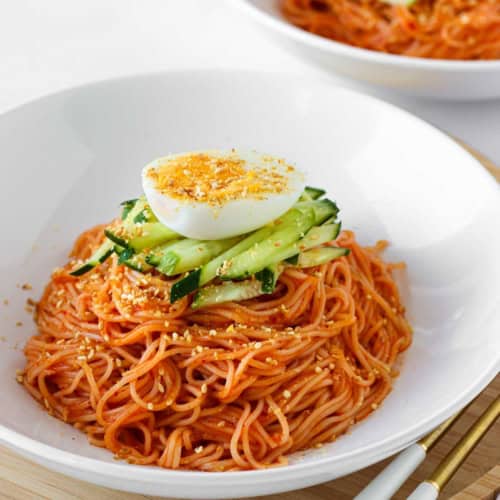
Bibim Guksu (Korean Spicy Cold Noodles)
Bibim guksu is a cold Korean noodle dish — chewy somyeon noodles coated in a spicy, sweet, and tangy gochujang sauce, finished with crisp cucumber, a hard-boiled egg, and toasted sesame seeds.
Yield: 2
Calories: 625kcal
Ingredients
- 200 g somyeon noodles
- ice cubes , for chilling the noodles (Note 1)
Sauce:
- 2 garlic cloves , minced
- 2 ½ tbsp sugar
- ¾ tbsp gochugaru
- 2 tbsp gochujang
- 4 tbsp Korean brewed vinegar | yangjo-sikcho, or rice vinegar
- 2 tbsp soy sauce
- ½ tsp yeongyeoja | Korean mustard (Note 2)
- 1 ½ tbsp sesame oil
- 1 tbsp maesiljeong | Korean plum extract (Note 3)
Toppings:
- ½ cucumber , finely julienned
- 1 hard-boiled egg , halved
- 1 tbsp sesame seeds , lightly crushed (for topping)
Instructions
- Make the sauce – Mix all the sauce ingredients together in a bowl until the sugar is fully dissolved.
- Prepare the toppings – Cut the cucumber into a fine julienne. Toast the sesame seeds in a dry pan for a few minutes, until lightly golden and fragrant, then lightly crush them, leaving some texture.
- Cook the noodles – Bring a large pot of water to a boil and add the noodles. When the water foams and rises, add a cup of cold water. Let it come back to a boil and repeat once more, for a total of three boil-ups. Cook for about 2 to 4 minutes in total depending on your preferred texture; I like mine at around 3 minutes 30 seconds. (Note 4)
- Rinse and chill the noodles – Drain the noodles and rinse them vigorously under cold running water. Transfer them to a large bowl of ice water with ice cubes and rinse them again with your hands. Drain very well. (Note 1)
- Toss and serve – In a large bowl, toss the well-drained noodles with all the sauce until evenly coated. Divide between bowls and top with cucumber, hard-boiled egg, and sesame seeds. Serve immediately. (Note 5)
Notes
1. Ice water and ice cubes – Rinsing removes excess surface starch and stops the cooking process immediately. The ice water also chills the noodles completely and helps give them the firm, springy texture that works so well in bibim guksu.
2. Yeongyeoja (연겨자) – It should stay a subtle background flavor in the sauce rather than overpowering the other ingredients. Taste before adding more, as it is easy to use too much. No yeongyeoja? Sub in a pinch of wasabi (about half the amount).
3. Maesiljeong (매실액기스) – It adds mild sweetness, a fruity note, and a little acidity to the sauce. If you do not have it, replace 1 tbsp maesiljeong with ½ tbsp sugar. Taste the sauce and adjust if needed. If you are using maesiljeong and find the sauce too sweet, reduce the regular sugar slightly rather than cutting back on the maesiljeong.
4. Cooking – Somyeon releases a lot of starch, which causes the water to foam up quickly and can make it boil over. Adding cold water brings the foam back down and helps the noodles cook more evenly. Repeat this twice for a total of 3 boil-ups.
5. Serving – Toss the noodles just before serving. If they sit in the sauce for too long, they can release water and lose their firm texture.
Nutrition
Serving: 1 serving | Calories: 625kcal | Carbohydrates: 105g | Protein: 22g | Fat: 17g | Saturated Fat: 3g | Polyunsaturated Fat: 6g | Monounsaturated Fat: 6g | Cholesterol: 93mg | Sodium: 1965mg | Potassium: 602mg | Fiber: 2g | Sugar: 19g | Vitamin A: 1124IU | Vitamin C: 6mg | Calcium: 124mg | Iron: 5mg
