You’ll love this doenjang jjigae if you’re into hearty Korean stews — it’s packed with tofu, zucchini, potato and onion in a savory soybean paste broth with a little kick from gochugaru.
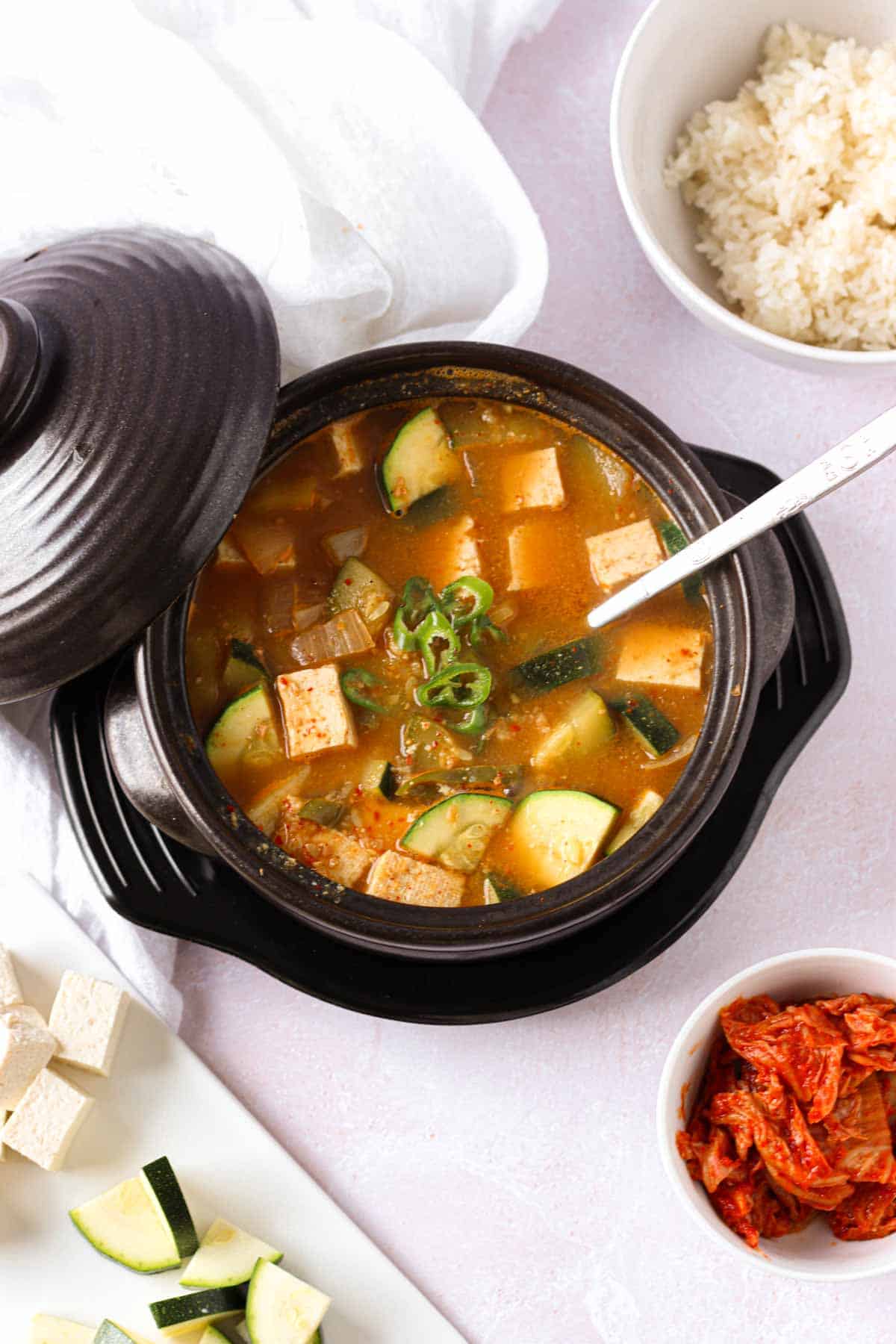
Doenjang jjigae is one of my comfort foods, especially alongside Korean barbecue. I love having a hot bowl of it with rice and banchan.
The recipe itself is simple, but getting the amount of doenjang right and adding the vegetables in the right order makes a big difference.
This version is based on my mom’s doenjang jjigae, which I’ve made and adjusted several times before sharing it here 😄
What is doenjang jjigae?
Doenjang jjigae (된장찌개) is a traditional Korean stew made with doenjang — a fermented soybean paste — simmered with tofu, zucchini, potatoes, and anchovy broth. It’s one of the most iconic dishes in Korean cuisine, served daily in Korean households alongside steamed rice.
It can be enjoyed as a main dish or a side, and is often customized with a protein like pork or seafood. The depth of flavor from the fermented soybean paste gives doenjang jjigae its distinctively rich and comforting taste.
Why you’ll love this recipe
Ingredients
Base
- Water – I mix water with anchovy broth powder for the base. You can use kelp broth instead, or plain water if that’s what you have.
- Anchovy broth powder (myeolchi powder) – Anchovy broth comes in various forms. This time, I used powder (the one from Chung Jung Won) but you can also find it in tea bags to steep in water. Alternatively, you can make your own anchovy broth by soaking dried Korean anchovies (myeolchi) in water and then removing them.
- Doenjang (Korean soybean paste) – The ratio of doenjang to water is crucial for making the perfect doenjang jjigae. Using too little doenjang can yield a bland taste, while an excessive amount can lead to overly salty jjigae.
- Gochugaru (Korean red pepper flakes) – Add more or less gochugaru depending on how spicy you want the stew. Doenjang jjigae usually isn’t extremely spicy.
Added ingredients
- Potato – Opt for a small potato, as a larger one could be excessive for the hotpot. Feel free to cut your vegetables as you prefer, but my preference is to halve the potato lengthwise and then slice it into thick pieces. Slicing them too thinly could result in quicker cooking and potential breakage.
- Onion – Roughly chop the onion into sizable squares or slice it.
- Zucchini – Similar to the potato, slice it into thick pieces. I usually cut it into quarters for smaller, spoon-friendly portions.
- Garlic cloves – I prefer using a garlic press here, but finely minced garlic works too.
- Firm tofu – Make sure you use firm tofu rather than soft tofu. I prefer dicing it into 1 cm / 0.4 inch pieces for easy scooping, though you can also choose to cut thicker slices if you prefer.
- Cheongyang chili (Korean chili) – Adding chili is optional. It brings an extra kick of spiciness. If you’re going for that fiery flavor but can’t find Korean chilies, go for small green or red chilies, which typically pack heat (unlike the milder Western large chili peppers).
Cheongyang chili is a small Korean green chili with a fairly high level of heat. Large green or red chilies sold in many Western supermarkets are usually much milder, so they won’t give the stew quite the same level of spice.

How to make doenjang jjigae?
- Prepare your vegetables – Cut the zucchini lengthwise, then cut it again perpendicular to create 4 long quarters. Slice the zucchini into thick pieces.
- Cut the onion into large square pieces.
- Chop the chili.
- Cut the potatoes in half lengthwise, then cut into thick slices.
Note: regardless of how you choose to cut your vegetables, aim for similar bite sizes to ensure even cooking.
- Cook the doenjang jjigae – In the ttukbaegi or in a pot, add water and anchovy broth powder. Bring it to a boil over medium-high heat.
- Add the doenjang and gochugaru. Stir on medium-high heat for a minute until the soybean paste is dissolved.
- Then add the potato, onion, and garlic.
- Bring to a boil for 5 minutes.
- Add the zucchini. Boil for 5 minutes or until all the vegetables are almost cooked.
- Add the tofu and Cheongyang chili.
- Boil for 2-3 more minutes or until the potatoes, onions, and zucchini are fully cooked.
- Serve – Serve with steamed rice.

Additions and substitutions
additions
- Protein – Add thinly sliced beef, pork, shrimp or clams.
- Mushrooms – Enoki mushrooms work well in doenjang jjigae.
- Seafood – Add shrimp, squid or clams.
- Green onions – Add sliced green onion toward the end if you like.
Substitutions
- Anchovy broth – Replace it with kelp broth for a vegetarian base.
- Cheongyang chili – Replace it with another small spicy green or red chili.
Vegetarian doenjang jjigae
To make a vegetarian version, simply replace the anchovy broth with dasima (kelp) broth — it brings the same deep umami flavor without the fish. The rest of the recipe stays exactly the same since it’s already made with veggies and tofu.
To make dasima broth: simmer a 4×4 inch (10×10 cm) piece of dried kelp in 1¾ cup (420 ml) of cold water over medium-low heat, then remove it just before it comes to a boil.
How to serve doenjang jjigae?
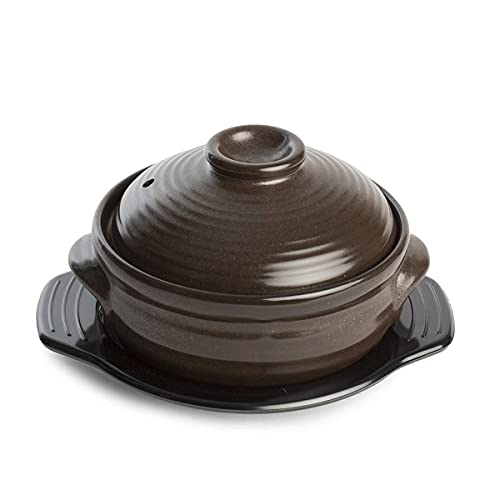
Doenjang jjigae is often served in a ttukbaegi, a Korean clay pot that keeps the stew hot. A regular pot works too, and you can transfer the stew to individual bowls for serving.
Serve it hot with steamed rice, kimchi and any other banchan you like. I like spooning some rice into the broth as I eat.
It can be served as part of a Korean meal or alongside Korean barbecue.
How to store, freeze and reheat?
Storing
Doenjang jjigae is usually made to be eaten in one sitting, but if you have leftovers:
- If you cooked it in a ttukbaegi, cover it with the lid.
- Otherwise, transfer it to an airtight container.
Store it in the refrigerator for up to 3 days.
Freezing
Doenjang jjigae isn’t usually frozen because it’s often made in the right amount for one meal. If you do freeze it, keep in mind that the tofu and vegetables may change texture after thawing and reheating.
Reheating
If it’s in a ttukbaegi, reheat it on the stovetop until hot.
Alternatively, transfer it to a microwave-safe bowl and reheat it in the microwave for 2–3 minutes, or until heated through.
Emma’s tips
- Use a flavorful broth. Anchovy or kelp broth gives the stew more depth than plain water.
- Measure the doenjang. The ratio of water to soybean paste makes a noticeable difference in the final broth.
- Add the vegetables in stages. Start with potatoes and onion, then add zucchini and tofu later so everything finishes cooking at roughly the same time.
- Adjust the spice. Use more or less gochugaru and Cheongyang chili depending on your preference.

RECIPE FAQ
More Korean restaurant-style recipes?
- Kimchi Pancakes
- Dakgalbi (Korean Spicy Chicken Stir-Fry)
- Bulgogi (Korean Marinated Beef)
- Dolsot Bibimbap
PSSST… WANT COZY RECIPES?
If you make this recipe, leave a comment and a ★ rating to share what you thought. It really helps me keep bringing you new recipes!
Don’t forget to sign up for my newsletter and get your free ebook with 8 authentic Korean recipes, plus my latest recipes straight to your inbox.
Doenjang Jjigae (Korean Soybean Paste Stew)
Ingredients
- 420 ml water
- ½ tbsp anchovy broth powder (myeolchi powder) | or use kelp broth (Note 1)
- 3 tbsp doenjang | Korean soybean paste (Note 2)
- 1 tsp gochugaru | Korean red pepper flakes
- 1 small potato , chopped and cut into thick slices
- ½ onion , roughly chopped into large pieces or sliced (1 cm / 0.4 inch)
- ¼ zucchini , sliced and cut into thick quarters
- 2 garlic cloves , minced
- ½ firm tofu block , diced
- ½ Cheongyang chili (Korean chili) , chopped (optional) (Note 3)
Instructions
- Prepare your vegetables (Note 4) – Cut the zucchini lengthwise, then cut it again perpendicular to create 4 long quarters. Slice the zucchini into thick pieces.
- Cut the onion into large square pieces.
- Chop the chili.
- Cut the potatoes in half lengthwise, then cut into thick slices.
- Cook the doenjang jjigae – In the ttukbaegi or in a pot, add water and anchovy broth powder. Bring it to a boil over medium-high heat.
- Add the doenjang and gochugaru. Stir on medium-high heat for a minute until the soybean paste is dissolved.
- Then add the potato, onion, and garlic.
- Bring to a boil for 5 minutes.
- Add the zucchini. Boil for 5 minutes or until all the vegetables are almost cooked.
- Add the tofu and Cheongyang chili.
- Boil for 2-3 more minutes or until the potatoes, onions, and zucchini are fully cooked.
- Serve – Serve with steamed rice.
recipe notes
Equipment
Video
Nutrition
The nutritional details provided on That Cute Dish are for informational purposes only and are automatically calculated. Please consider them as estimates rather than precise values, as ingredients and measurements can vary.