What is gochugaru?
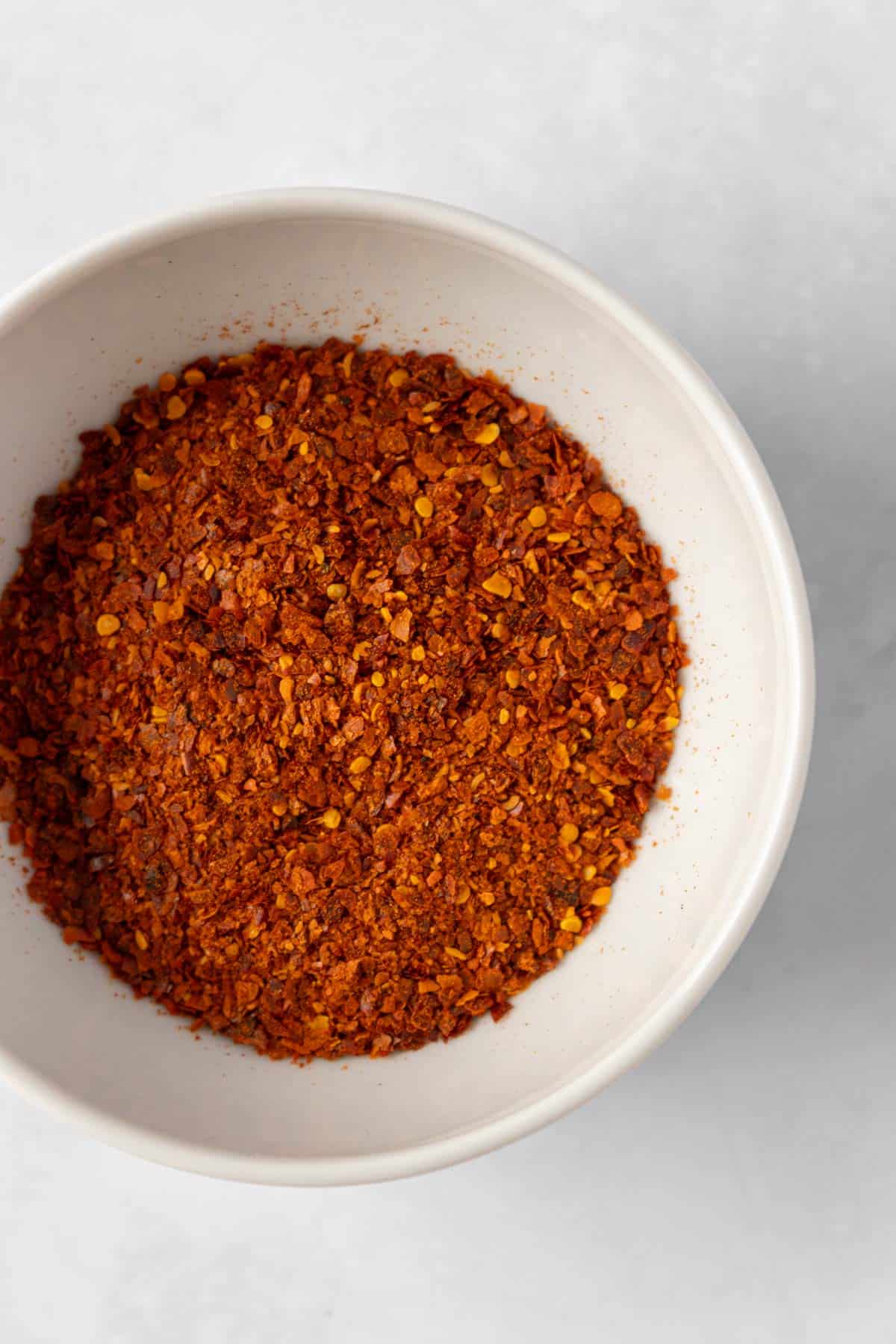
Gochugaru (go-choo-gah-roo), or 고춧가루, is Korean red pepper that has been dried and ground into flakes or powder. As a Korean home cook, I use it often in my cooking, from kimchi and stews to spicy noodle sauces.
Heat can range from mild to hot depending on the product, and it comes in different grinds — picking the right one makes a difference depending on what you’re making.
What does gochugaru taste like?
Gochugaru has a fruity red-pepper flavor with mild to moderate heat and a little natural sweetness.
Gochugaru adds more than heat: it also gives Korean dishes their red color and distinctive chili flavor. Because it is usually moderately spicy, recipes can use generous amounts without becoming excessively hot.
Regular vs fine gochugaru
The main difference to look for when buying gochugaru is the grind.
In many Korean grocery stores, you’ll find regular gochugaru, which has visible flakes and is used for kimchi and everyday Korean cooking, alongside fine gochugaru, which has a more powdery texture and blends more smoothly into sauces and seasoning pastes.
For napa cabbage kimchi, use regular gochugaru rather than the fine version.
Labeling varies by brand, and you may also see other grind descriptions such as coarse gochugaru. For everyday cooking, the most useful distinction is between the standard flakier gochugaru and the fine, powdery version.
How is gochugaru made?
Gochugaru is made from dried red chili peppers that are ground to the desired texture.
You may see 태양초 (taeyangcho) on Korean packaging. This means the peppers have been sun-dried. Other drying methods are also used, so taeyangcho is useful information on the label rather than something every gochugaru needs to be.
The color, texture, and heat can vary depending on the peppers and the product.
Gochugaru vs gochujang and other chili ingredients
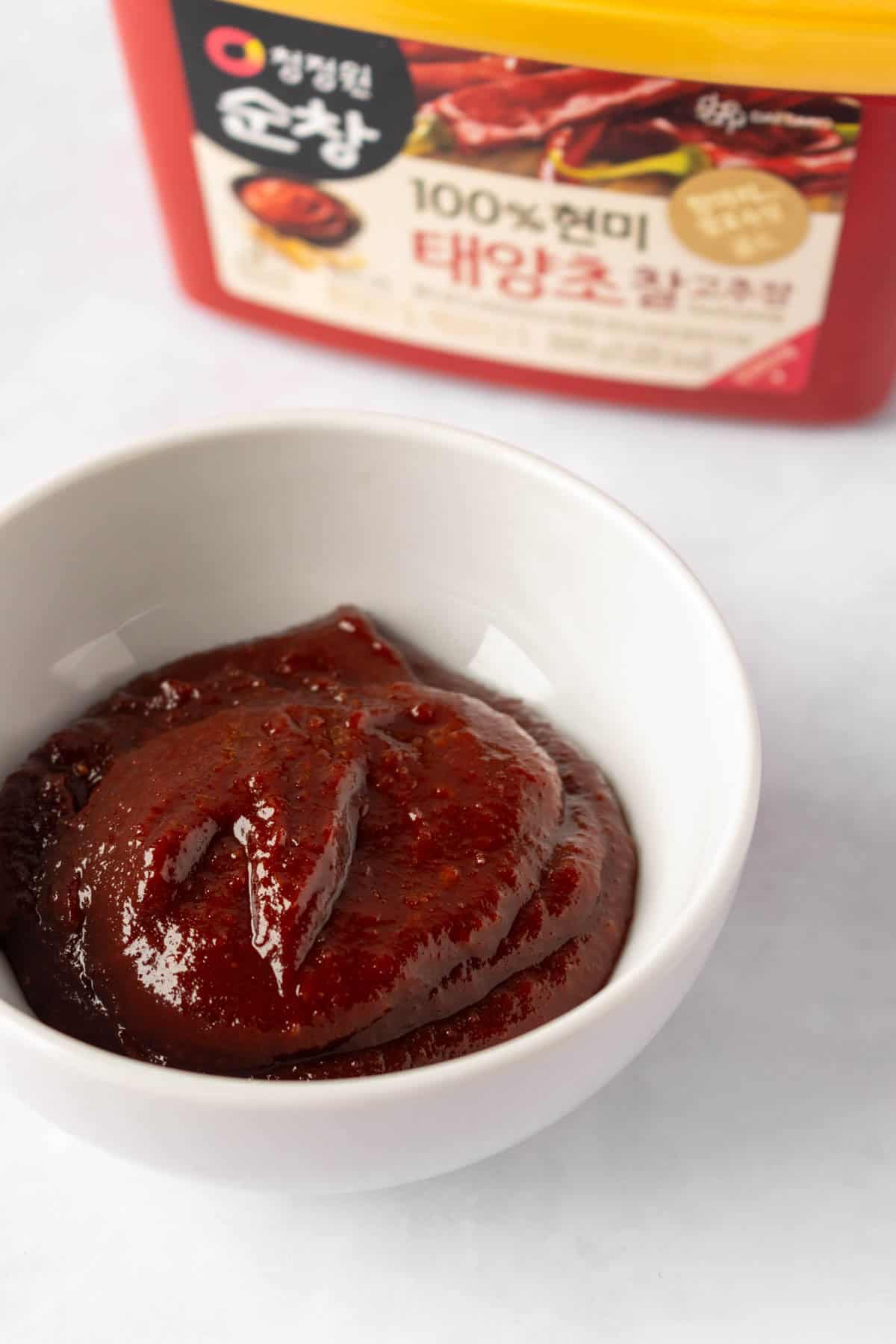
Gochugaru and gochujang are closely related, but they aren’t interchangeable.
Gochujang is a fermented paste traditionally made with gochugaru, a grain or starch base, fermented soybean components, and salt. It therefore adds sweetness, saltiness, and a deeper fermented flavor as well as heat.
Crushed red pepper is generally sharper and less fruity than gochugaru. Cayenne is finer and usually much hotter, so it should be used more sparingly. Paprika can provide a similar red color, but it is usually milder and lacks gochugaru’s distinctive chili flavor.
These ingredients can sometimes work as substitutes, but each one changes the dish’s flavor, texture, or heat level.
How to use gochugaru
Gochugaru is used in all kinds of Korean dishes:
- Kimchi – It gives kimchi much of its red color, chili flavor, and heat.
- Stews – A small amount adds some heat and color to doenjang jjigae, while dakdoritang uses considerably more as part of its spicy sauce.
- Noodle sauces – My bibim guksu uses both gochugaru and gochujang. They each bring something different: the gochujang gives the sauce body and fermented flavor, while the gochugaru adds extra chili flavor and heat.
- Marinades and seasoning mixtures – Gochugaru is often combined with ingredients like soy sauce, garlic, sesame oil, and gochujang depending on the dish.
You can also use it outside traditional Korean cooking whenever you want red-pepper flavor without relying only on sharp heat.
How spicy is gochugaru?
There isn’t one fixed heat level for gochugaru.
Some products are fairly mild, while others are noticeably hotter. Even two bags that look very similar can taste different.
If you switch brands, don’t assume your usual amount will give you exactly the same result. Use the recipe amount as a starting point, then adjust if needed.
Where to buy gochugaru
Korean grocery stores are the easiest place to compare different grinds and heat levels. Larger Asian supermarkets and online Korean grocery stores also commonly carry it. You can also find gochugaru on Amazon if you don’t have a Korean grocery store nearby.
Look for 고춧가루 on the package, then check the actual texture rather than relying only on the English name. Some products are translated as “red pepper powder” even when the gochugaru inside is fairly coarse.
How to store gochugaru
Always check the storage instructions on your package first.
I keep my opened gochugaru sealed in the fridge. If you buy a large bag, dividing the extra into smaller airtight portions and freezing them is practical because you don’t need to keep opening the whole package.
Keep it well sealed and protected from heat, light, air, and moisture to help preserve its color and flavor.
Gochugaru substitutes
There isn’t a true substitute for gochugaru. Other chili powders may provide a similar color or level of heat, but they will give the dish a different flavor.
If a recipe uses only a small amount of gochugaru, you can use another mild chili powder in an emergency, adjusting the quantity to taste. However, for kimchi and other recipes in which gochugaru is a key ingredient, it is best to use Korean gochugaru.
What to make with gochugaru
- Cheese Dakgalbi – Korean Spicy Chicken Stir-Fry
- Kimchijeon – Kimchi Pancakes
- Dakgangjeong – Bite-Size Spicy Korean Fried Chicken
- Jeyuk Bokkeum – Korean Spicy Pork