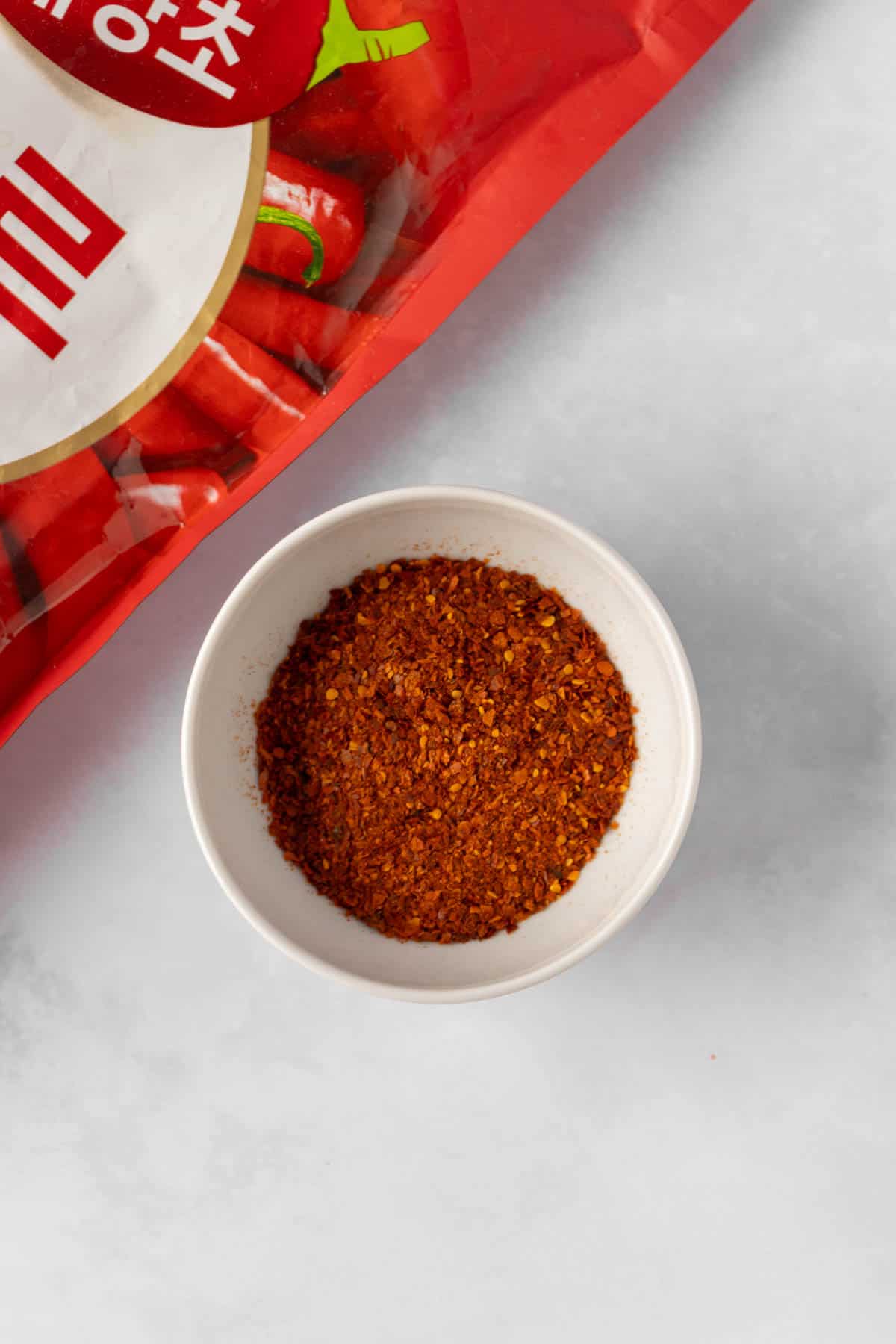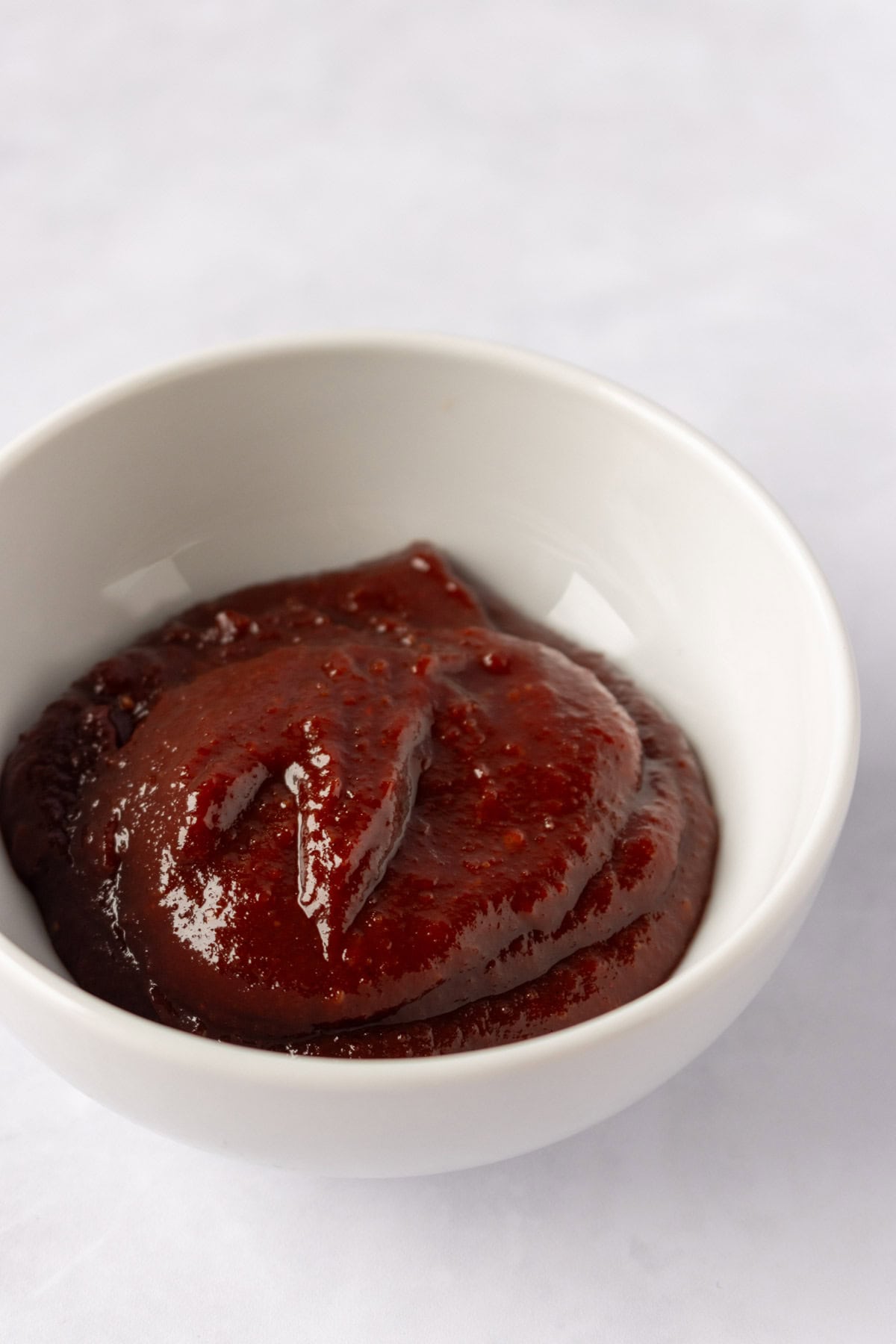
Gochujang is one of those ingredients I come back to often when cooking Korean food. A little goes a long way, and it can completely change the flavor of a sauce.
So, what is gochujang exactly? Gochujang (go-choo-jang), 고추장, is a thick Korean fermented chili paste made with red chili powder, a grain base, fermented soybean components, and salt. It’s spicy, savory, slightly sweet, and much more concentrated than the bottled “gochujang sauces” you may see beside it.
What is gochujang?
Gochujang belongs to jang, Korea’s family of fermented sauces and pastes. Traditional recipes vary, but they generally combine gochugaru with a grain or starch base, fermented soybean powder or meju, and salt. It’s thick and concentrated, so it’s usually mixed with other seasonings rather than used like a pourable hot sauce.
What does gochujang taste like?
Gochujang is spicy, savory, slightly sweet, and fermented. The flavor is deeper and rounder than simply adding chili flakes.
Its texture is closer to tomato paste than a pourable hot sauce. The balance also changes from brand to brand: some taste sweeter, saltier, or hotter than others.
That savory-sweet side is also why it works outside strictly traditional dishes. In my gochujang garlic bread, it’s mixed with butter, roasted garlic, and cheese.
What is gochujang made of?
Traditional gochujang is built around a few core ingredients:
- Gochugaru – Korean red chili powder for color and heat.
- Grain or starch – often rice, glutinous rice, barley, or another grain preparation.
- Fermented soybean powder (mejugaru) – adds savory, fermented depth.
- Salt – for seasoning and preservation.
Commercial ingredient lists can be much longer. Depending on the brand, you may also see corn syrup, wheat extract, alcohol, soy seasoning, or other ingredients, so always check the label if you have allergies or specific dietary needs.
A brief history of gochujang
Gochujang developed later than older Korean jang such as doenjang and ganjang. The Academy of Korean Studies notes that it appeared after chili peppers were introduced to Korea and identifies Jeungbo Sallim Gyeongje, from the mid-18th century, as the earliest Korean text to record a gochujang-making method.
Gochujang is also part of Korea’s wider jang culture. In 2024, UNESCO inscribed the knowledge, beliefs, and practices related to jang making in the Republic of Korea on its Representative List of the Intangible Cultural Heritage of Humanity. The recognition covers jang-making culture as a whole, not gochujang alone.
How is gochujang made?
Traditionally, the mixture is left to ferment and mature in earthenware jars. Exact methods and proportions vary by household and region.
Commercial versions are produced on a larger scale using standardized formulations. Ingredients and ratios vary by brand, which is why two tubs can taste noticeably different.
How spicy is gochujang?
Gochujang can range from fairly mild to very spicy, depending on the product. It also brings sweetness, saltiness, and fermented flavor, so its heat doesn’t taste quite like a plain chili sauce.
In Korea, gochujang can be labeled using a five-level GHU (Gochujang Hot Taste Unit) scale:
On Korean products that use the scale, it can be helpful when comparing heat levels. If you’re new to gochujang, start with a small spoonful. In dishes like cheese dakgalbi, it’s part of a larger sauce, so the other ingredients soften the heat.
Gochujang vs similar ingredients
How to use gochujang
Think of gochujang as a concentrated base that you build a sauce around.
- Marinades and stir-fries. It works especially well with pork and chicken.
- Stews and braises. A spoonful adds heat and body, like in my dakdoritang.
- Noodle and rice sauces. Gochujang is often mixed with sesame oil, sweetener, vinegar, or other seasonings depending on the dish — for example bibim guksu or dolsot bibimbap.
- Glazes. It works well in sticky sauces for fried chicken, tofu, or roasted vegetables.
Gochujang already brings salt, sweetness, heat, and fermented flavor, so adding more changes more than just the spice level.
Where to buy gochujang
You’ll usually find gochujang in Korean grocery stores, larger Asian supermarkets, or some regular supermarkets. You can also buy gochujang online.
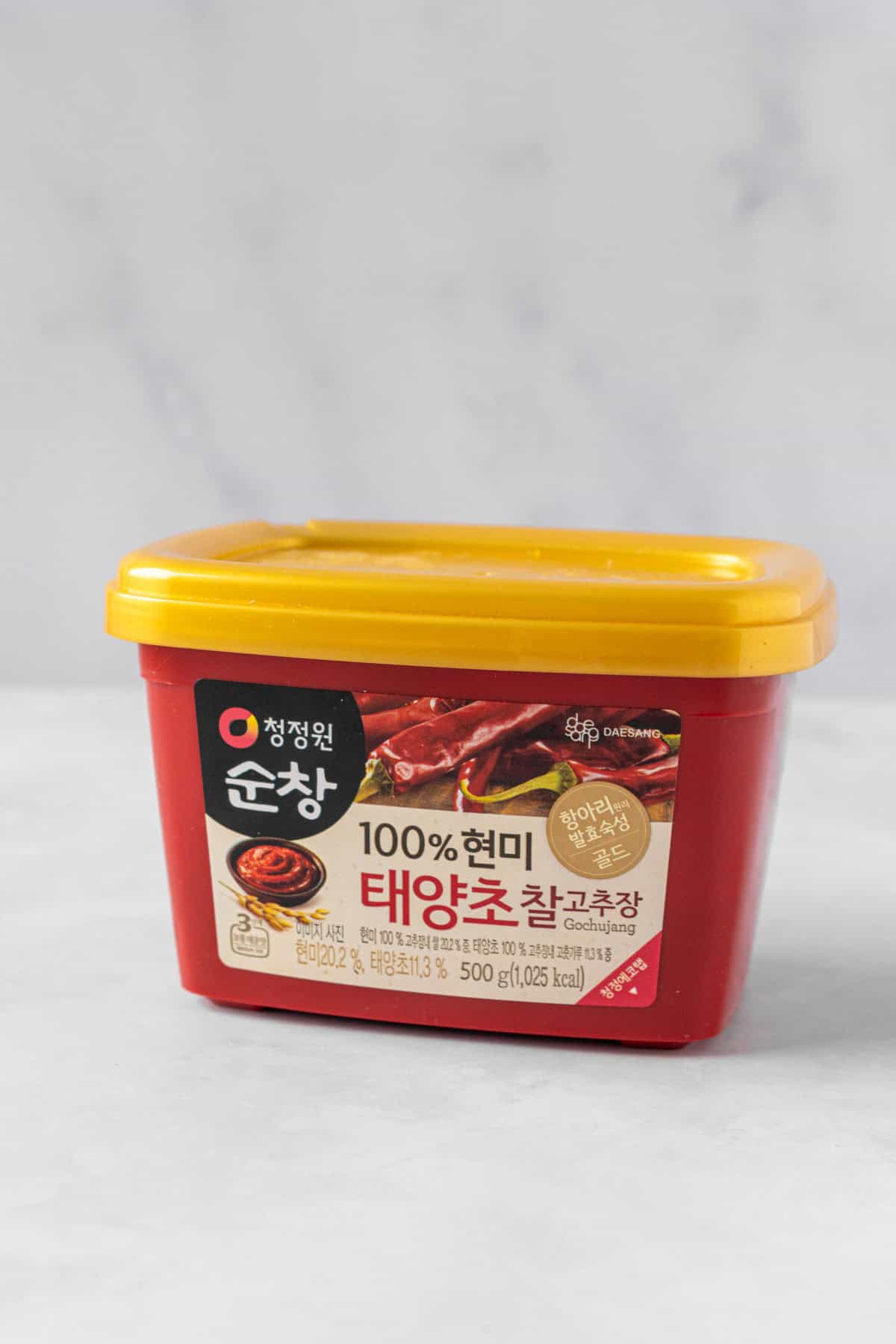
Look for 고추장 on the label. When choosing a tub, check the ingredient list and heat level. If you need a gluten-free product, don’t assume every gochujang is the same — some commercial versions contain wheat.
How to store gochujang
After opening, check the instructions on your specific tub. Many commercial brands recommend refrigeration, but storage directions vary, so the package should be your reference rather than a universal shelf-life rule. I always keep mine in the fridge after opening.
Gochujang substitutes
There isn’t a true substitute for gochujang because it brings heat, sweetness, saltiness, and fermented savory flavor at once.
In a pinch, another chili paste mixed with a little miso and sweetener can move in a similar direction, but it won’t taste the same. Sriracha alone is not a one-to-one substitute: it’s thinner, sharper, and lacks gochujang’s fermented grain-and-soybean character.